How to Make an All Butter Pie Crust (Foolproof Recipe)
Learn how to make the best flaky all-butter pie crust from scratch with this simple, reliable recipe. Perfect for all your favorite pies—tender, buttery, and easy to make by hand or in a food processor. Makes a double crust.
Ingredients
For the All Butter Pie Crust:
- 3 cups flour
- ¼ cup sugar
- 1 teaspoon salt
- 1 cup unsalted butter, cold
- 6 tablespoons cold milk or ice water, add more as needed, one tablespoon at a time
Instructions
By Hand:
- In a medium bowl, whisk together the flour, sugar, and salt until well combined. Add the cold butter cubes. Using your fingertips, a pastry cutter, or a fork, work the butter into the flour mixture until it resembles coarse crumbs with some pea-sized pieces of butter remaining. Those visible pieces of butter are important for flakiness.
- Gradually add the cold milk or ice water, starting with 6 tablespoons. Gently knead or press the dough just until it comes together. If the dough seems dry and won’t hold together, add more liquid one tablespoon at a time. Be careful not to overwork the dough—overmixing develops gluten and can make the crust tough instead of tender.
In a Food Processor:
- Combine the flour, sugar, and salt in the bowl of a food processor and pulse a few times to mix. Add the cold cubed butter and pulse (or process in short bursts) until the mixture is crumbly and the butter is broken down into small pieces.
- With the processor running, slowly drizzle in the cold milk or ice water through the feed tube. Pulse until the dough just begins to form larger clumps and holds together when pinched. Stop as soon as it comes together—do not process until it forms a solid ball.
Dividing, Chilling & Rolling the Dough
- Turn the dough out onto a lightly floured surface and gently bring it together if needed. Divide it in half. Form one half into a disc, wrap it tightly in plastic wrap, and refrigerate it for at least 30 minutes (or up to 2 days).
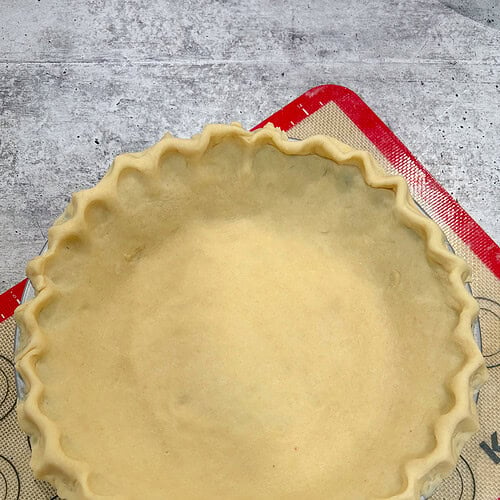
- Press the other half into the bottom and up the sides of a 9-inch pie pan, then chill the crust-lined pan while you prepare your filling. Chilling helps the butter firm up again and prevents excessive shrinkage during baking.
- When you’re ready to roll, lightly flour your surface and rolling pin. Roll the chilled dough from the center outward, rotating it occasionally, until it’s about 1/8-inch thick and large enough for your pan.
Tried this recipe?Let us know how it was!