
Mayonnaise Roasted Turkey
Learn the secret to a juicy, flavorful Thanksgiving centerpiece with our Mayonnaise Roasted Turkey recipe! This easy method ensures crispy skin and juicy, tender meat infused with fresh herbs and spices. Perfect for your holiday feast! No more dry and bland roast turkey ever after this!
Ingredients
- 1 1/2 cups real mayonnaise
- 1 Tablespoon ground paprika
- 1 Tablespoon fresh rosemary, (or 2 teaspoons dried rosemary)
- 1 Tablespoon fresh thyme, (or 2 teaspoons dried thyme)
- 2 teaspoons ground sage
- 2 teaspoons garlic powder
- 1/4 teaspoon or a pinch of ground cayenne
- 1 Tablespoon super fine Himalayan or mineral salt, or to taste (if using kosher salt or larger grain salt, you can increase this amount to intensify the seasoning)
- 1 1/2 teaspoons ground black pepper, or to taste
- 12 pound turkey
- 1 whole garlic, cut in half
- 1 lemon, quartered
- Extra fresh herb sprigs
Instructions
- In a bowl, combine the mayonnaise, paprika, rosemary, thyme, sage, garlic powder, cayenne, salt, and black pepper. Mix well to create a flavorful herb-infused mayonnaise rub.

- Remove any giblets from the turkey cavities. Pat the bird dry with paper towels, inside and out. This step is crucial for achieving crispy skin.

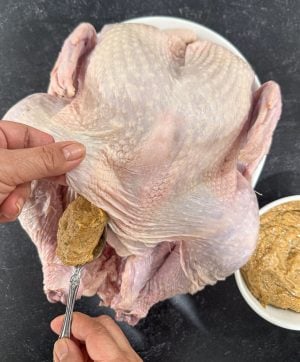
- Generously coat the turkey with the mayonnaise mixture, both inside and out. Don't forget to carefully lift the skin and apply the rub directly to the meat (both breasts and thigh areas) for maximum flavor penetration. If desired and for more intense flavor and convenience, too you can do this step ahead of time (one day ahead). Make sure to bring the turkey to room temperature first before roasting if applying the rub ahead of time.
- Place the halved garlic, lemon quarters, and extra herb sprigs inside the turkey cavity. This will infuse the meat with additional aromatics as it cooks.
- Preheat your oven to 325°F (165°C). Place the turkey breast-side down on a rack in a roasting pan. Cooking the turkey this way helps keep the breast meat moist and juicy. Cover with foil and roast initially for 2 hours and 15 minutes (this estimate is based on my 12-pound turkey). Adjust the timing based on the size of your turkey. See turkey cooking time guide in the post above.

- Flip a turkey that's been cooking breast-side down once the underside is nicely browned and the juices have begun to run clear. Adjust the time based on your bird's size. This usually happens after roasting at a lower temperature for the bulk of the total cook time. Flipping at this stage allows you to finish roasting the turkey breast-side up so the skin can brown and crisp during the final portion of cooking. Use protective mitts, flip the turkey carefully, then return it to the oven, breast side up, and cook until an instant-read thermometer registers 165°F (74°C) when inserted into the thickest part of the breast and the thigh. (Please read the note below if you don't fancy flipping the bird).
- Once cooked, let the turkey rest for 30-40 minutes before carving. This allows the juices to redistribute, ensuring moist and flavorful meat.

Notes
TIPS & TRICKS
Do I really need to cook the turkey breast side down and flip it later? If you can, yes. It's worth the effort. But, a reader who used a 20-pound bird didn't do it because of its size and just cooked the bird breast side-up the entire time. She just covered it in foil for most of the cooking time and uncovered it near the end to crisp up and brown the skin. It worked great for her, too (see her comment at the end of the post). So, it's up to you. The mayonnaise rub should give the bird enough moisture and lots of flavor.
Here are some tips to help you flip the bird (especially a large one), should you decide to.
To flip a 16-20 pound turkey during cooking, use long, heatproof oven mitts and a sturdy set of tools—often a clean kitchen towel, meat forks, or large tongs. First, remove the roasting pan from the oven and set it on a stable surface, ensuring you have enough space and no distractions. With a helper if possible, each person inserts a meat fork into each end of the turkey or uses large wooden spoons or tongs to get a firm, even grip. Very carefully, rotate the turkey from one side to the other (for example, from breast side down to breast side up) by lifting and guiding rather than pulling, taking care to avoid splashing hot juices. Move slowly, supporting the turkey’s back and legs as you turn it to prevent tearing the skin. Once repositioned, slide the turkey back into the oven to finish roasting and browning.
- Always wear heatproof gloves or oven mitts to avoid burns.
- Let hot juices settle a moment before flipping to reduce the chance of spills.
- Having a helper makes the process smoother and safer for a large, heavy bird.
Nutrition
Calories: 889kcalCarbohydrates: 3gProtein: 89gFat: 56gSaturated Fat: 13gPolyunsaturated Fat: 23gMonounsaturated Fat: 15gTrans Fat: 0.1gCholesterol: 335mgSodium: 1247mgPotassium: 1290mgFiber: 1gSugar: 1gVitamin A: 445IUVitamin C: 7mgCalcium: 91mgIron: 8mg
Tried this recipe?Let us know how it was!