Bulgogi Kimbap (Korean Beef Seaweed Rice Roll)
Make flavorful Bulgogi Kimbap with savory marinated beef, sesame rice, kimchi, egg, and crisp vegetables—an easy Korean seaweed rice roll recipe you can make at home.
I was studying law at Oxford University when I first tasted kimbap (which literally translates to “seaweed” (kim) and “rice” (bap) in Korean). A Korean college mate not only introduced me to this favorite Korean snack, but she also kindly taught me how to make it! That introduction began my love for Korean food, especially kimbap. I realized it wasn’t really hard to make, and the effort is rewarded with tantalizing flavors from this everyday comfort food! I hope you try this.
Are you obsessed with Korean food, like me? Then you need to try these tried-and-tested Korean recipes, like our popular Slow Cooker Korean Sesame Garlic Beef, busy weeknight dinner-friendly Easy Korean Ground Beef Stir-fry, perfectly sweet and spicy Korean Slow Cooker Pork Ribs (Maeun Dwaeji Galbijjim), the viral Korean Cream Cheese Garlic Buns, and Korean Short Ribs Barbecue (Galbi) for grilled food lovers! You’ll love all of them!
Table of contents
Bulgogi Kimbap Recipe: Savory Korean Beef Seaweed Rolls
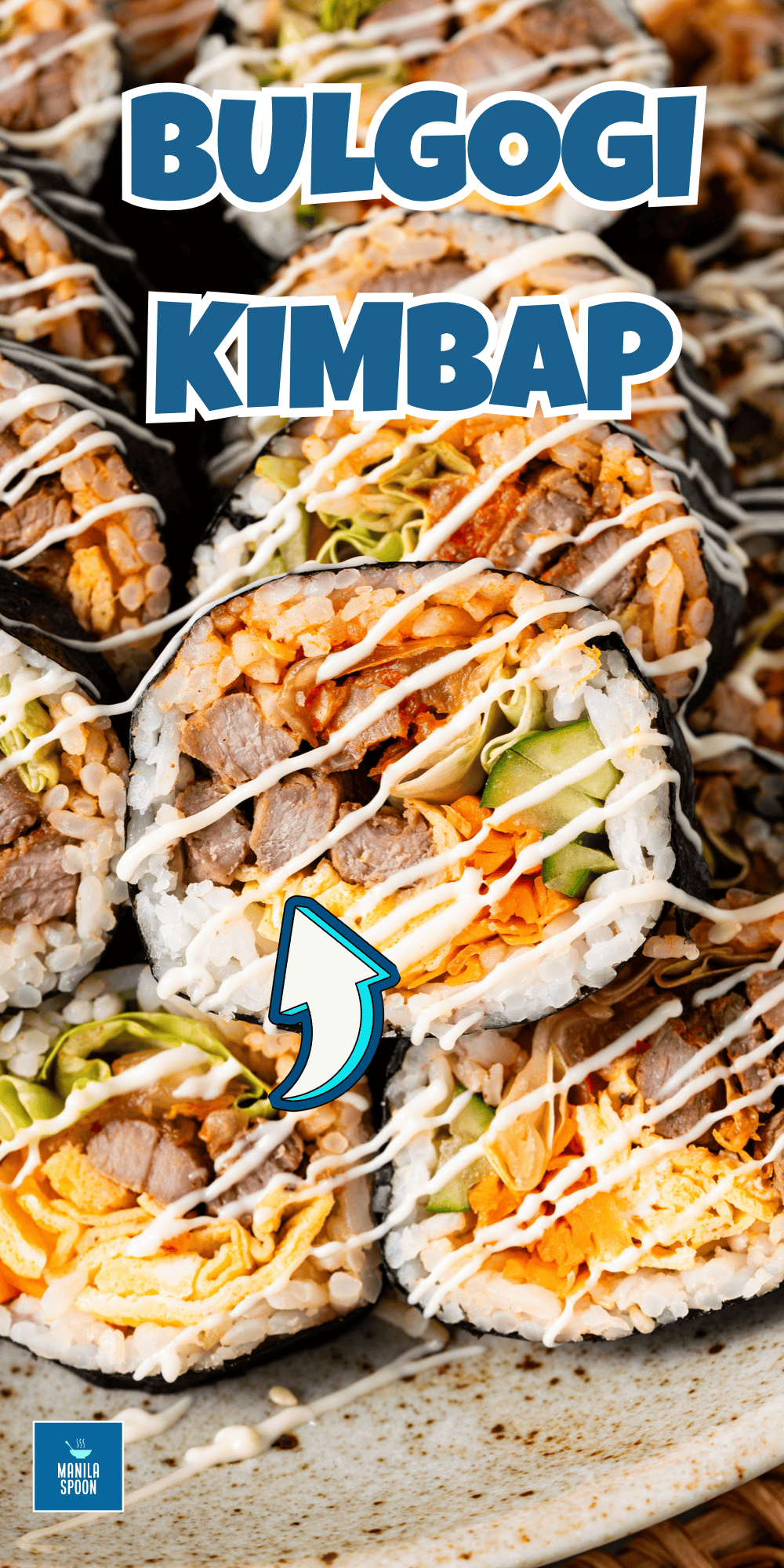
Bulgogi kimbap is a colorful, satisfying Korean rice roll filled with sweet-savory marinated beef, fluffy sesame-seasoned rice, crisp vegetables, egg, kimchi, and tender lettuce. Wrapped tightly in roasted seaweed and sliced into elegant bite-sized rounds, this homemade kimbap recipe delivers a wonderful contrast of textures and flavors in every piece.
Unlike Japanese sushi, traditional Korean kimbap usually uses cooked, seasoned fillings rather than raw fish. In this bulgogi kimbap variation, tender strips of Korean-style marinated beef bring a rich, deeply savory element to the roll, while cucumber, carrot, kimchi, and butterhead lettuce add crunch, freshness, and gentle acidity. This delicious, portable meal works for lunchboxes, picnics, road trips, party platters, or an easy Korean-inspired dinner at home.
Why You’ll Love Bulgogi Kimbap
This bulgogi kimbap recipe is one of those meals that looks impressive on the table but becomes very approachable once you understand the basic rolling method. The process has three simple parts: prepare the fillings, season the rice, and assemble everything in seaweed sheets.
Bulgogi, meaning “fire meat” in Korean, is known for its tender texture and balanced sweet, salty, garlicky flavor. Here, marinate sliced beef with light soy sauce, onion, garlic, ginger, mirin, sesame oil, and a touch of sugar. Once stir-fried, the beef caramelizes around the edges and stays juicy in the center—an ideal filling for a hearty Korean kimbap roll.
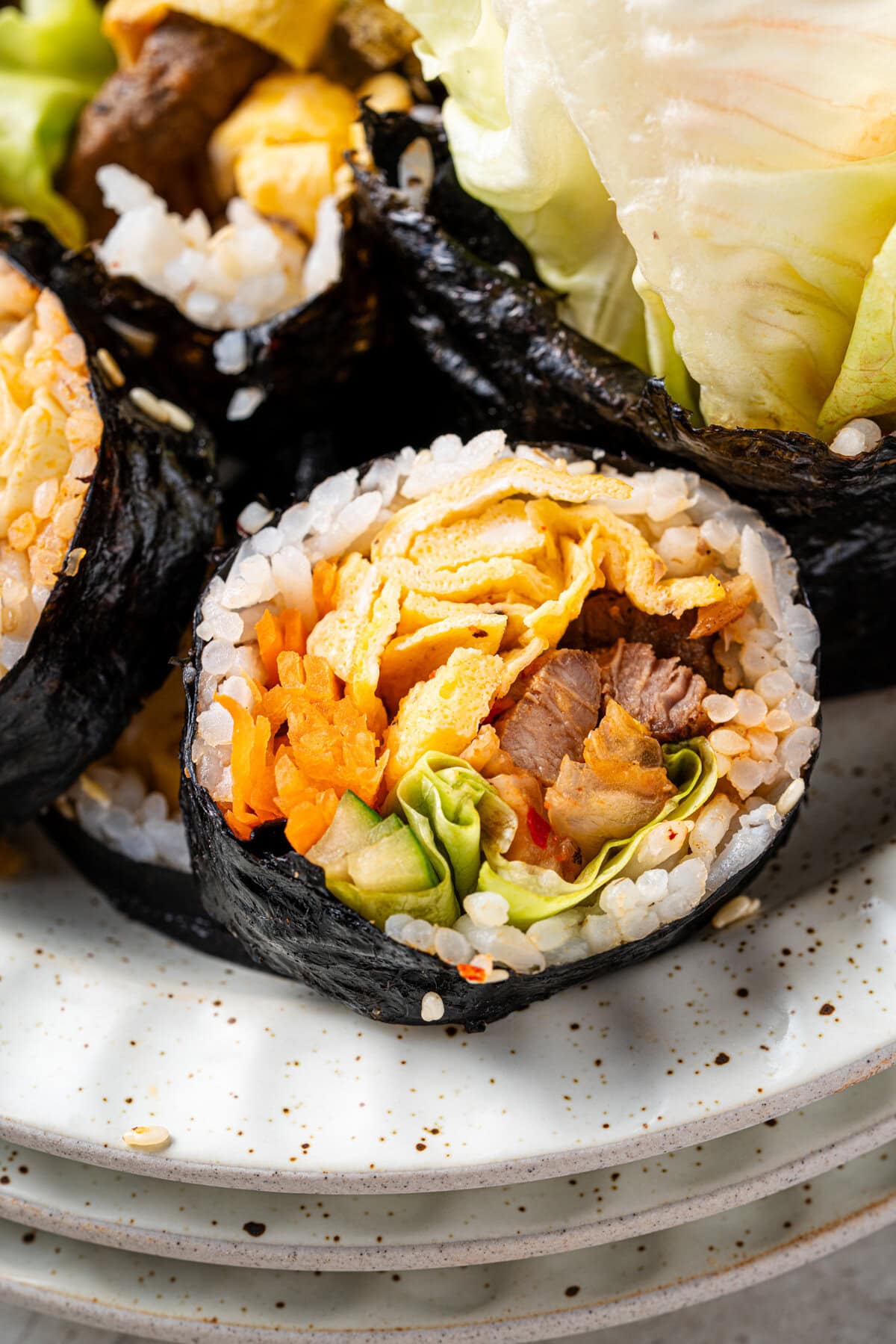
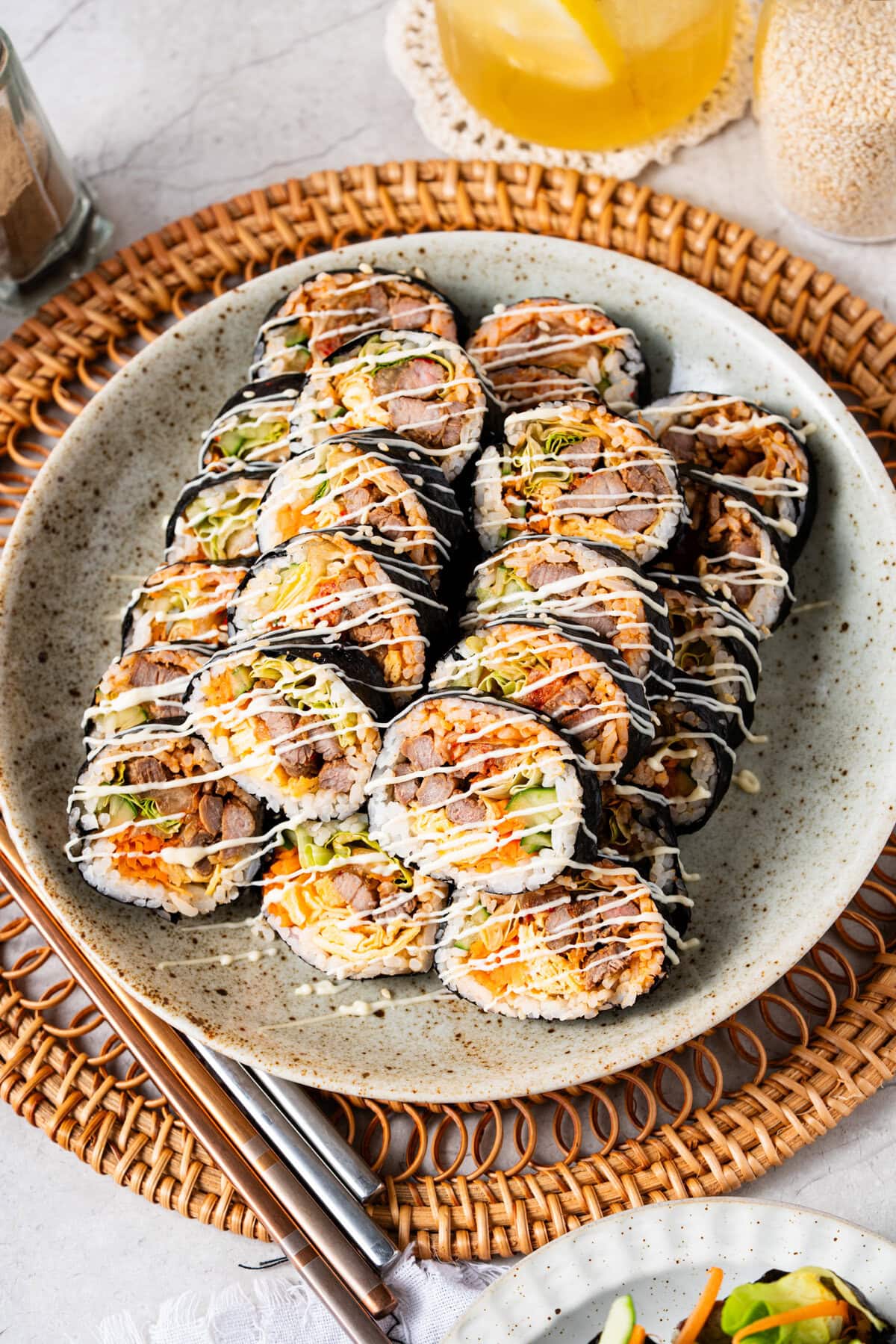
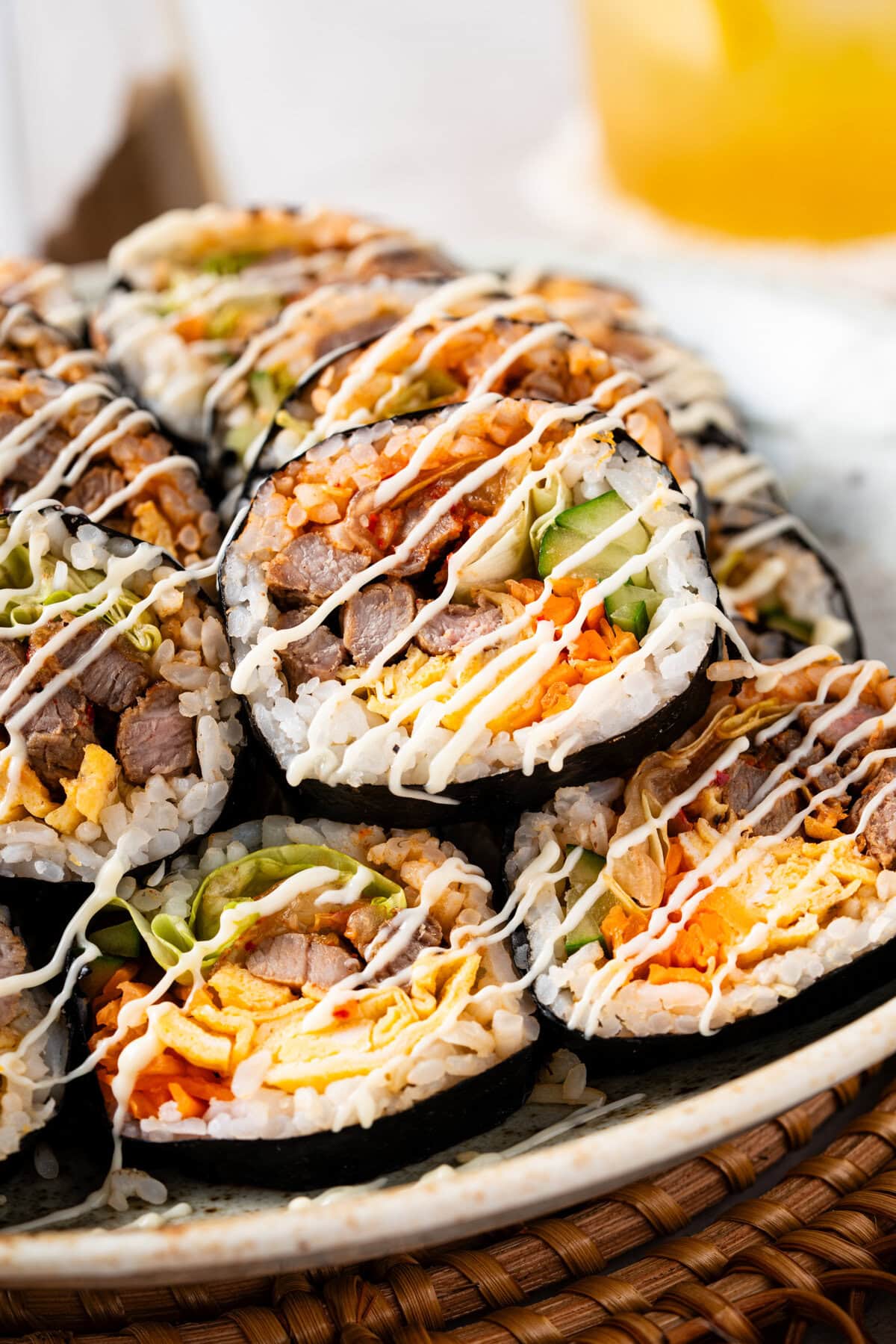
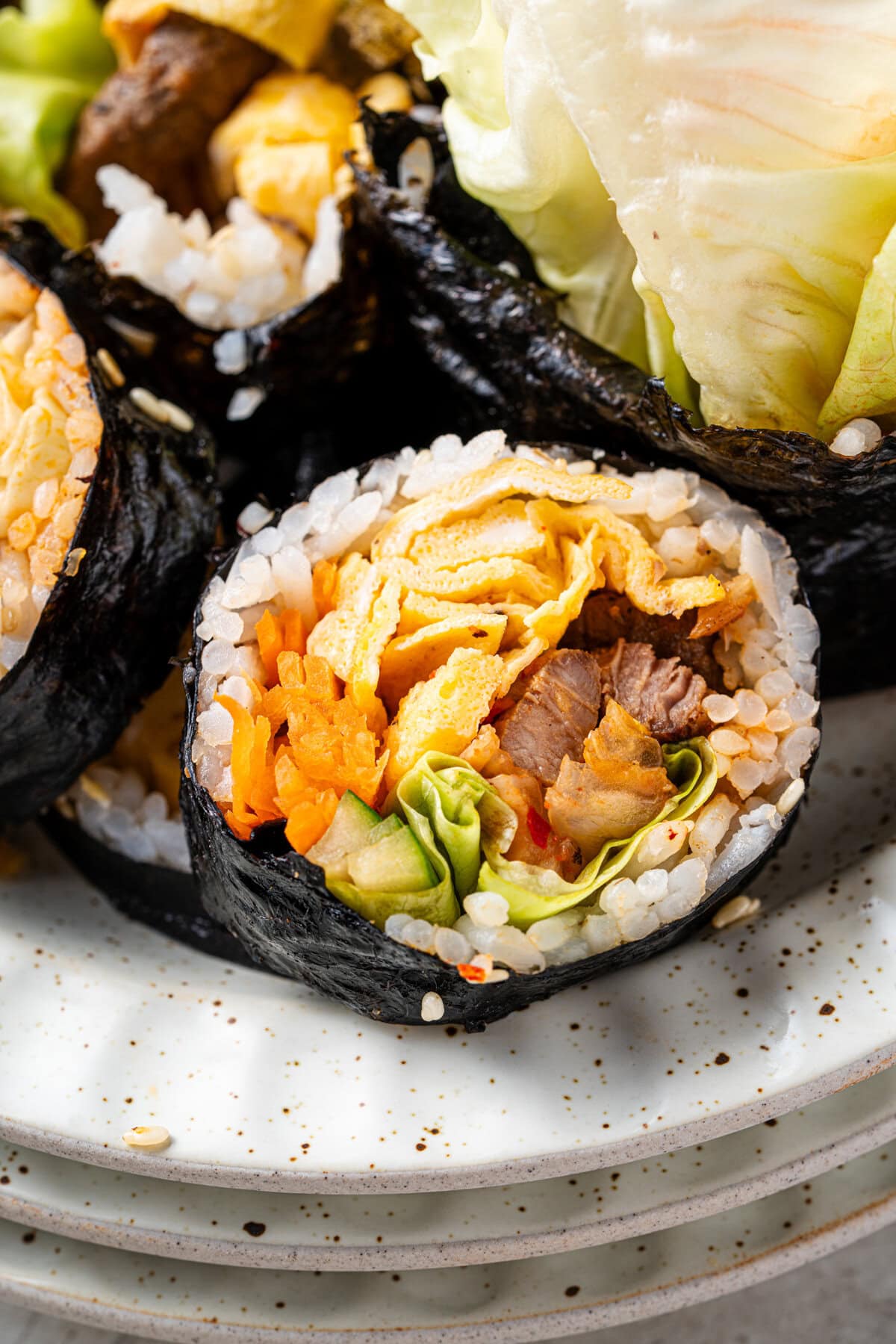
The beauty of this Korean rice roll lies in its layers. When you slice a perfectly rolled kimbap, you’ll see distinct, colorful sections: white rice dotted with sesame seeds, golden egg strips, vibrant orange carrots, fresh green cucumber, leafy lettuce, tangy kimchi, and gorgeous caramelized bulgogi beef. Each component plays a specific role in creating a harmonious bite that’s neither too heavy nor too light.
Why This Korean Recipe Works
This bulgogi kimbap recipe works because it respects traditional techniques while staying accessible for home cooks. The combination of properly marinated beef, well-seasoned rice, and fresh vegetables creates a balanced meal that’s both nutritious and satisfying. In just 65 minutes, you can have homemade Korean food on your table faster than ordering takeout.
The beauty of mastering this kimbap recipe is that once you understand the basic technique, you can experiment with different fillings. Try adding pickled radish, spinach, or even Spam for variation. The possibilities are endless.
Whether you’re new to Korean cooking or a seasoned home chef, bulgogi kimbap offers a delicious way to explore Korea’s wonderful flavors. Tender marinated beef, crisp vegetables, and nutty rice create an irresistible combination that will have everyone asking for seconds.
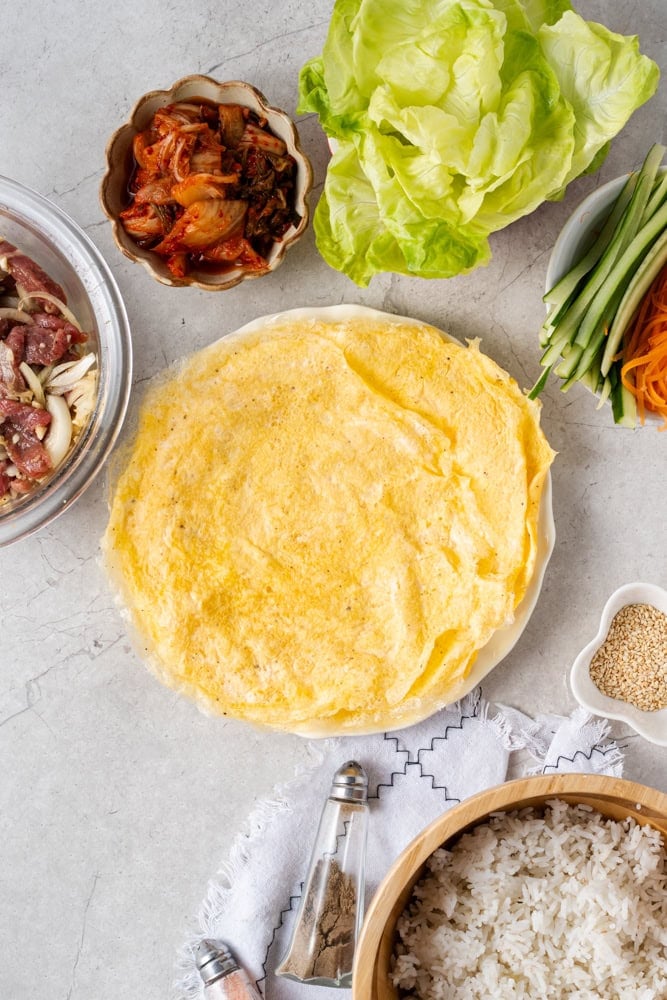
Ingredients for Korean Bulgogi Kimbap
- 3 large eggs
- Salt and pepper to taste
- 15 oz cooked rice
- 4 teaspoons sesame seeds
- 1 teaspoon sesame oil
- 6 seaweed sheets
- 2 oz julienned cucumber
- 2.8 oz shredded carrot
- 5 oz kimchi
- 1 butterhead lettuce
Marination of beef:
- 14 oz sliced beef
- ⅓ cup sliced onion
- 2 tablespoons light soy sauce
- ½ tablespoon minced garlic
- ½ tablespoon minced ginger
- 2 teaspoons mirin
- 2 teaspoons sesame oil
- 1 teaspoon granulated sugar
How to Make Korean Bulgogi Kimbap
Prepare the fillings:
Combine the sliced beef with the onion, light soy sauce, garlic, ginger, mirin, sesame oil, and sugar; mix well and marinate for 20 minutes.
Crack the eggs into a bowl and season with salt and pepper. Whisk until fully combined.
Heat cooking oil over medium heat in a pan. Cook the eggs into thin omelets, flipping once.
Repeat with the remaining egg mixture if needed. Remove from the pan, slice into strips, and set aside.
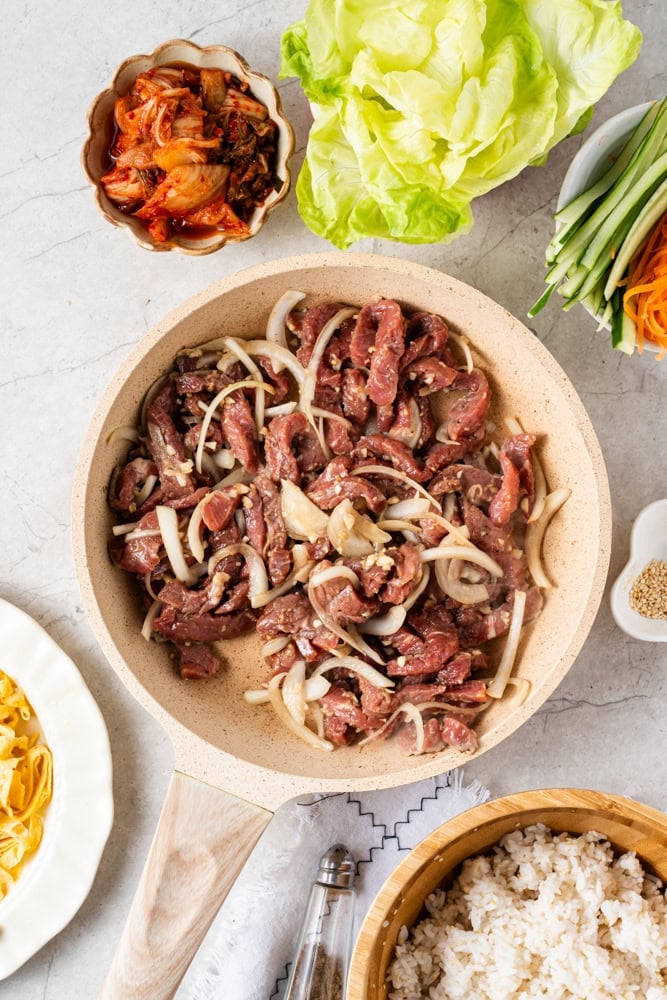
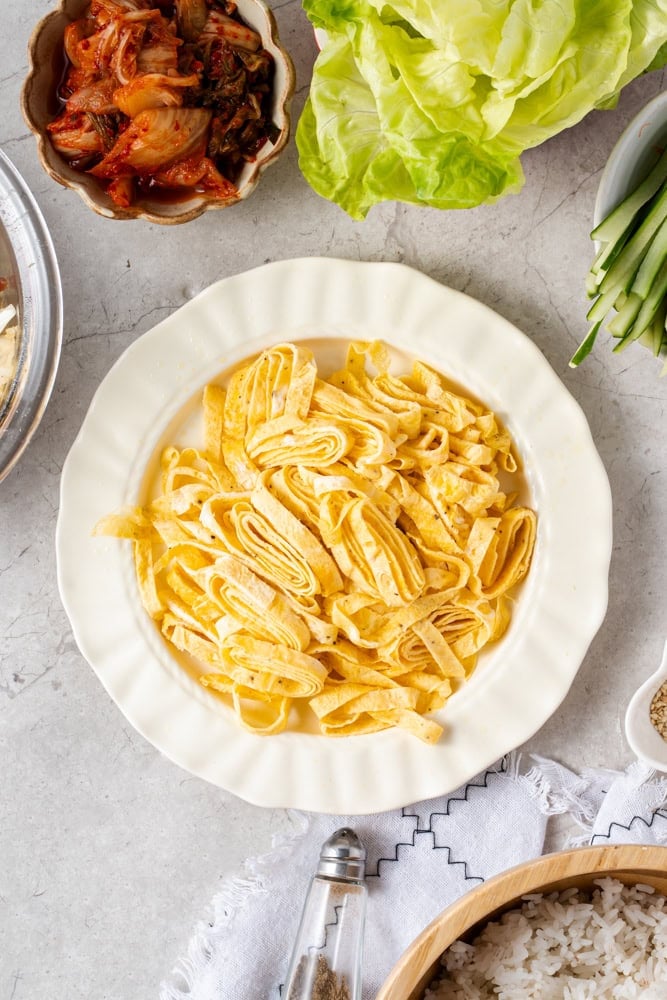
Season the cooked rice with sesame seeds and sesame oil. Mix evenly and set aside.
Heat oil in the same pan over medium-high heat, stir-fry the marinated beef until browned, then transfer to a plate.
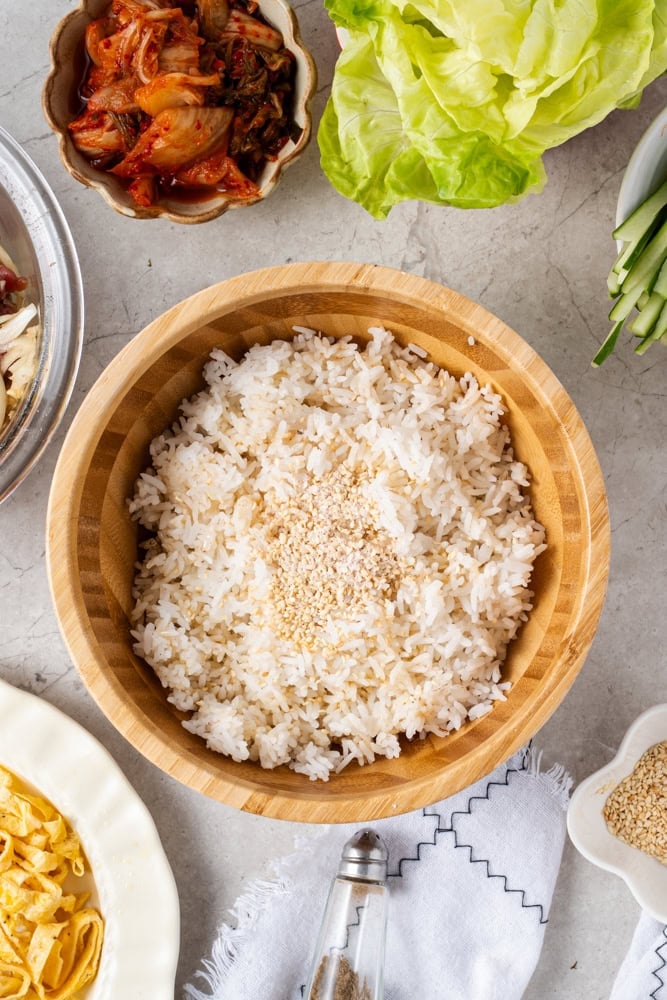
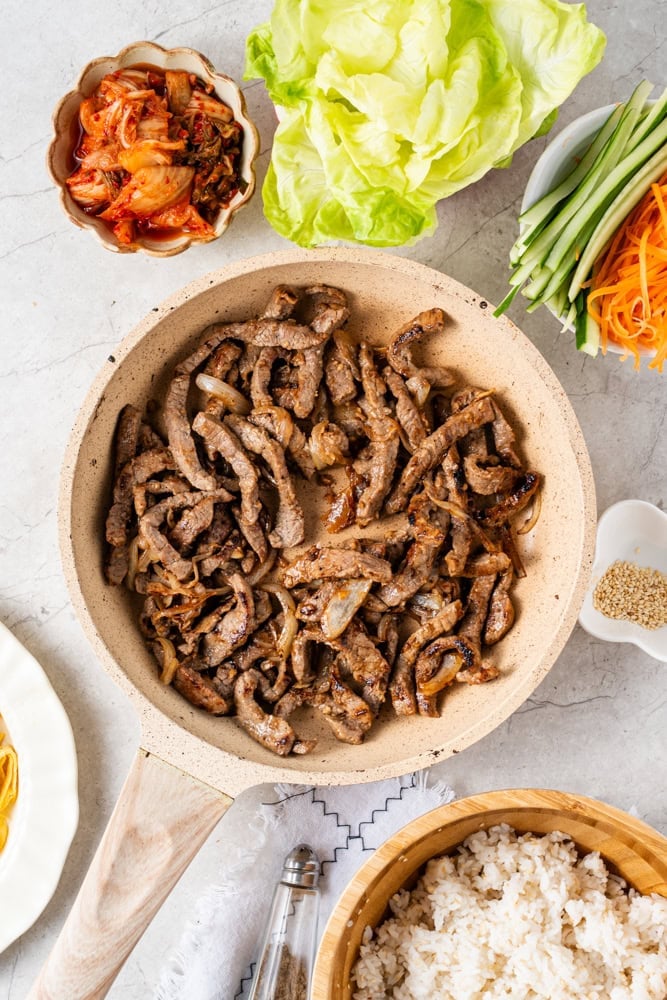
Assembly of Bulgogi Kimbap:
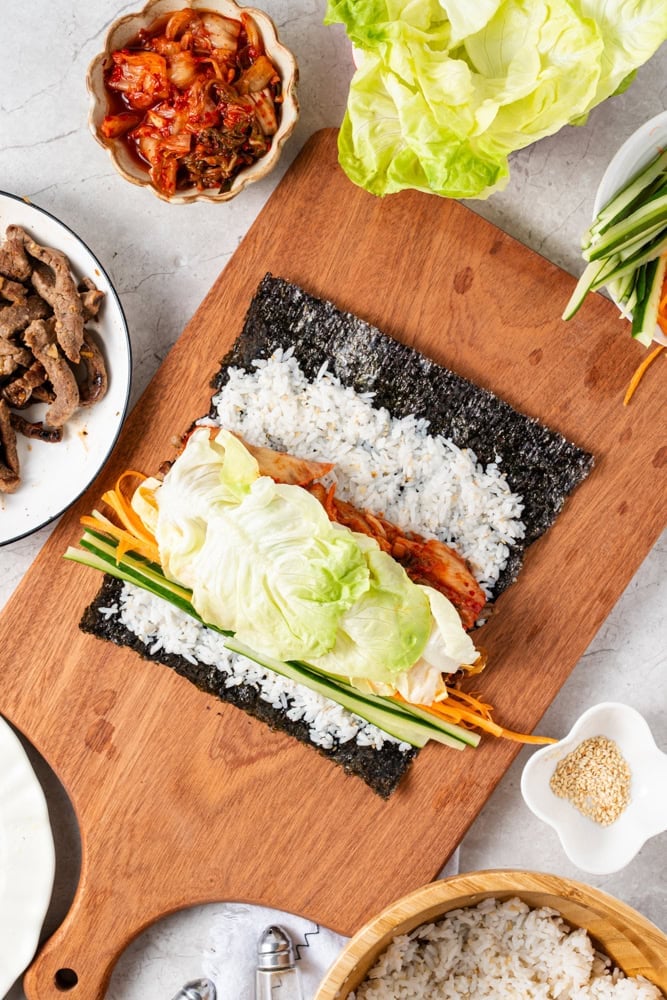
Place a seaweed sheet on a clean workspace.
Spread about ¾ cup of seasoned rice evenly over the seaweed, leaving about 1 inch uncovered at the top edge.
Arrange cucumber, carrot, egg slices, beef, and kimchi in rows across the rice.
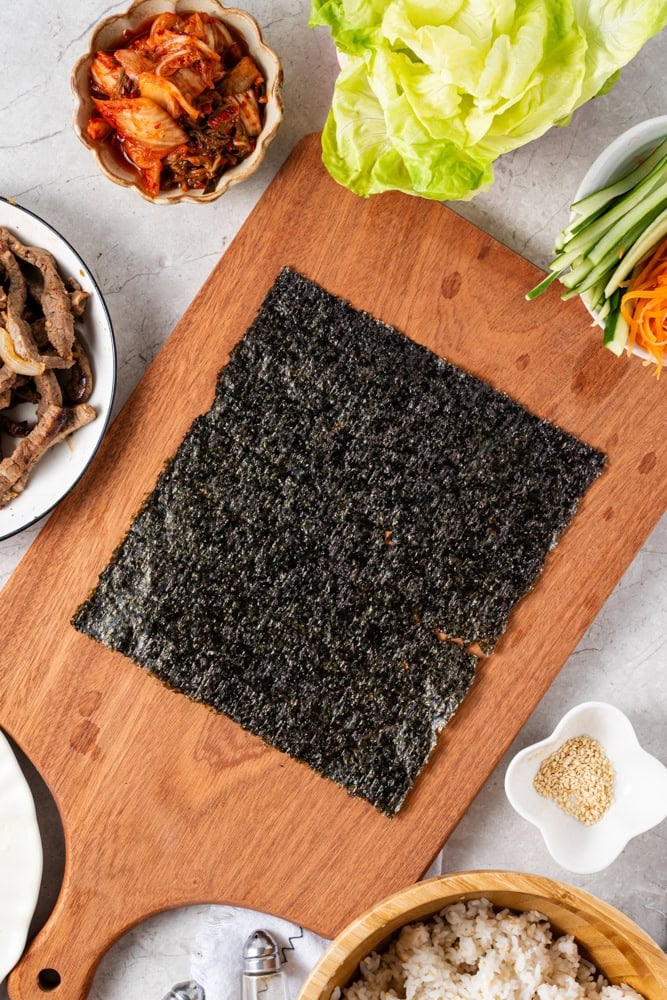
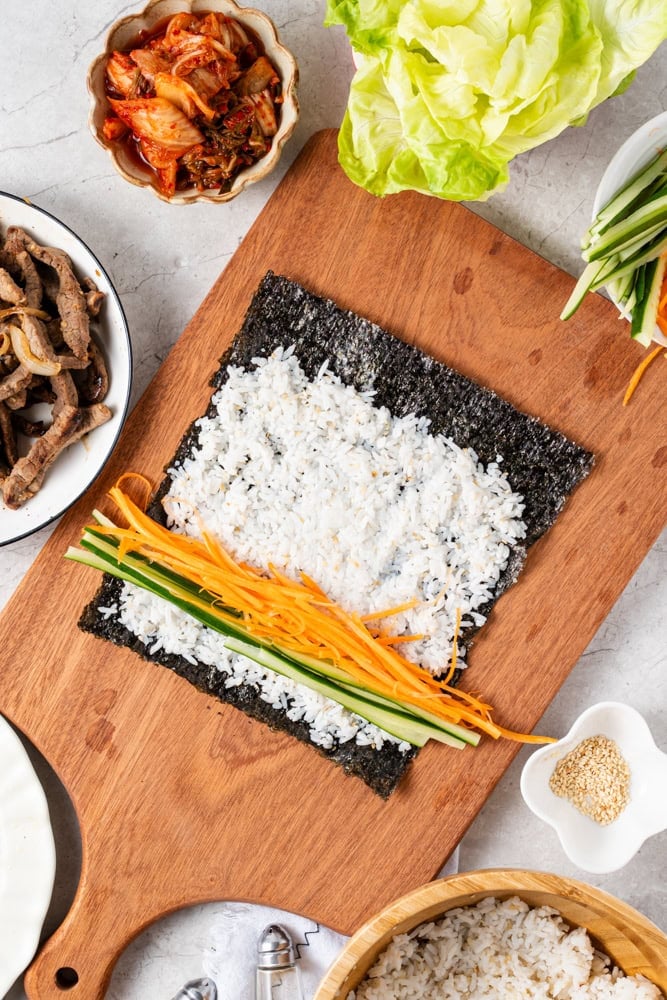
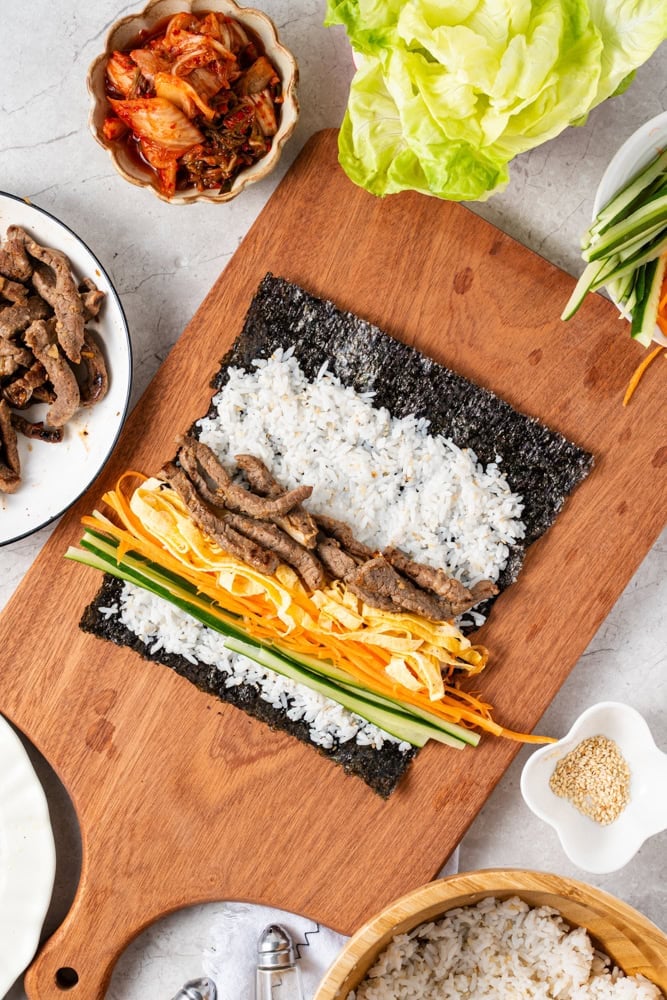
Top with butterhead lettuce.
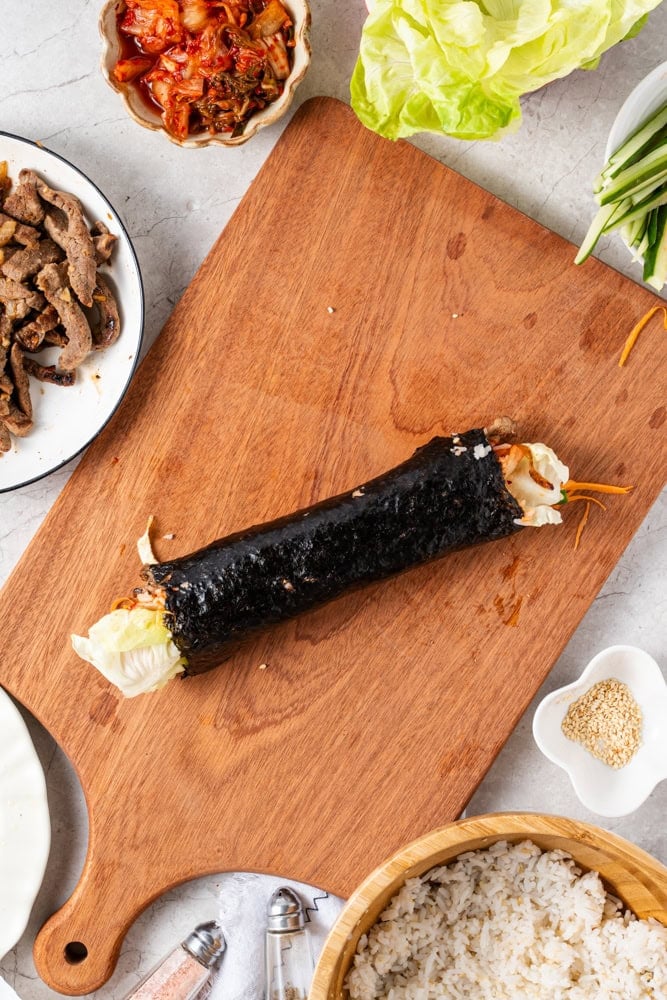
Roll tightly from the bottom, tucking in the fillings as you roll.
Starting from the bottom, roll the kimbap tightly while gently tucking in the fillings as you go. Lightly dampen the uncovered edge with water to seal the roll securely.
Garnish and Serve:
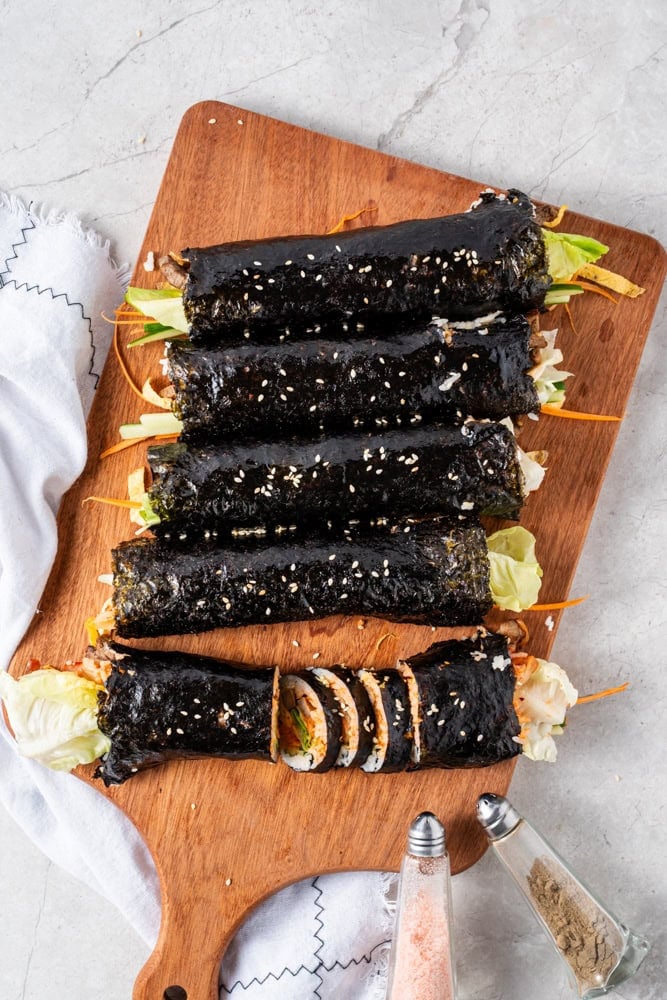
Lightly brush the roll with sesame oil and sprinkle with sesame seeds.
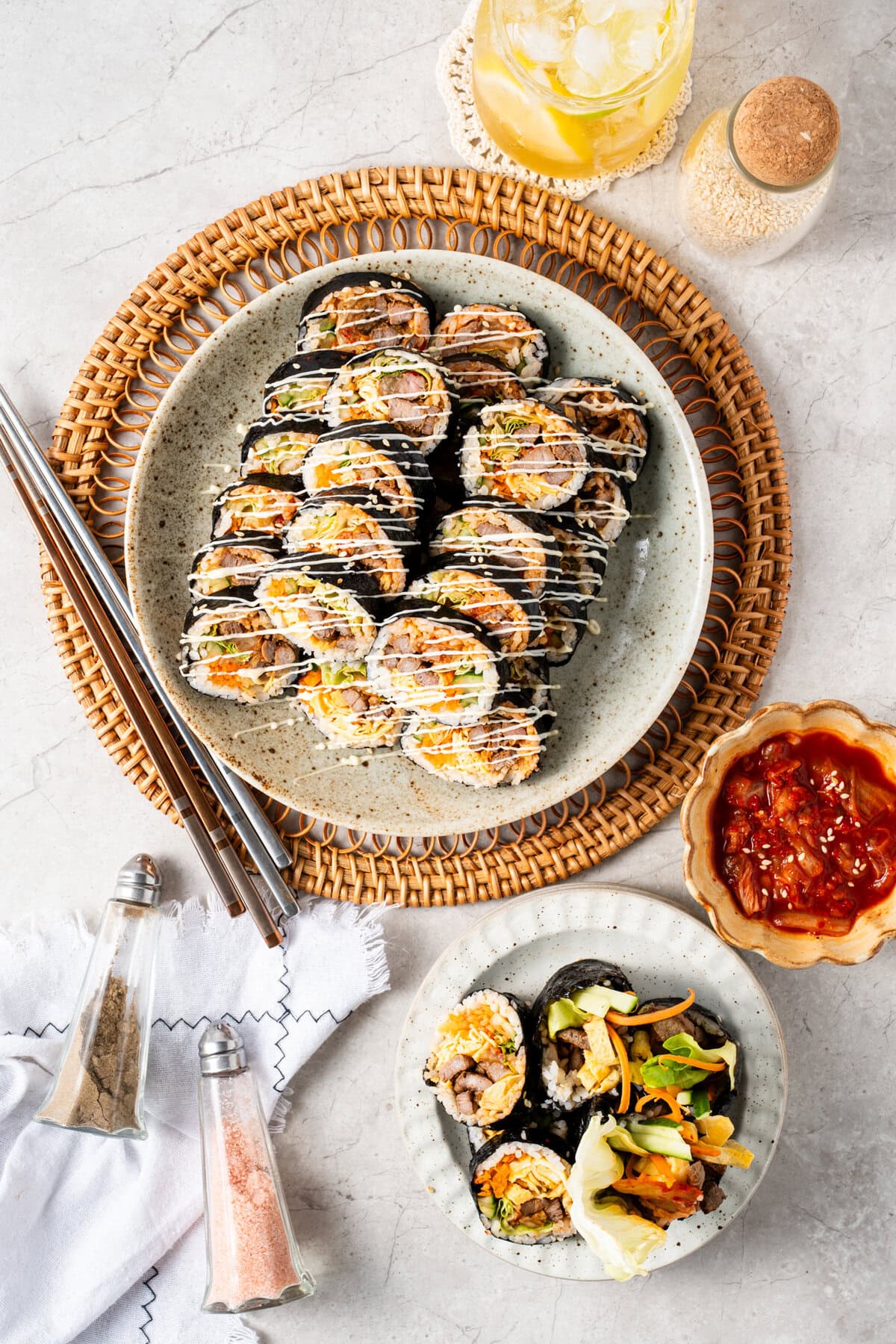
Slice with a sharp knife. Drizzle with Kewpie mayo, if desired. And serve immediately.
Frequently Asked Questions (FAQs)
Can I make bulgogi kimbap ahead of time?
Yes, you can prepare bulgogi kimbap up to 24 hours in advance, but no longer, so it doesn’t get soggy. For the best texture and flavor, keep the rolls tightly wrapped in plastic wrap and store them in the refrigerator until ready to serve. Remember, though, that it is best eaten fresh the same day because refrigeration may harden the rice.
What’s the difference between kimbap and sushi?
While both are rice rolls wrapped in seaweed, kimbap uses sesame oil-seasoned rice and cooked ingredients, while sushi uses vinegared rice and often features raw fish. Kimbap is a Korean dish with distinct flavors and techniques.
Can I freeze kimbap?
Freezing is not recommended as it significantly affects the texture of the rice, vegetables, and seaweed. Fresh or refrigerated kimbap always tastes better than frozen.
What type of seaweed is best for kimbap?
Use roasted seaweed sheets (gim or nori) specifically labeled for kimbap or sushi. These sheets are larger and have the right texture for rolling.
How do I prevent my kimbap from falling apart?
Use sticky short-grain rice, don’t overfill your rolls, roll tightly while tucking the ingredients, and seal the edge with a little water. Leaving a 1-inch gap at the top of the seaweed helps seal the roll neatly and prevents the fillings from spilling out. A sharp knife also helps maintain clean slices.
What type of rice is best for kimbap? Short-grain or medium-grain rice works best because it becomes slightly sticky, helping the rolls hold together properly.
Is kimbap eaten hot or cold? Kimbap is typically enjoyed at room temperature or slightly chilled, making it perfect for lunch boxes, picnics, and quick meals on the go.
Can I substitute the bulgogi beef with other proteins?
Absolutely. Try chicken bulgogi, pork, tofu, or even canned tuna. The rolling technique remains the same regardless of your protein choice.
Tips for Perfect Kimbap Rolls
The key to restaurant-style Korean kimbap is not complicated ingredients—it is organization and gentle technique. Prep all fillings before you begin rolling so you can assemble each seaweed sheet quickly.
- Keep the rice layer thin and even. Too much rice can overpower the fillings and make rolling difficult.
- Let the bulgogi cool slightly before adding it to the seaweed sheets.
- Squeeze excess liquid from kimchi if it seems especially wet. This prevents soggy kimbap.
- Cut cucumber into long, thin matchsticks so it runs neatly through each slice.
- Use a sharp, lightly oiled or dampened knife for clean cuts.
- Roll firmly enough to remove air pockets, but avoid pressing so hard that the seaweed tears.
- Serve the kimbap soon after slicing for the best texture and freshest seaweed flavor.
If you are new to rolling seaweed rice rolls, a bamboo sushi mat can help, but it is not essential. A clean kitchen towel, or even your hands, will work well once you get comfortable with the motion.
Best Storage for Bulgogi Kimbap
- Best enjoyed fresh. If needed, wrap the kimbap tightly in plastic wrap and store it in the fridge for up to 24 hours. Before serving, let it sit at room temperature for 10–15 minutes, or lightly brush with sesame oil to refresh the texture.
- Avoid freezing, as the rice and vegetables will lose their texture.
With tender bulgogi beef, fragrant sesame rice, fresh vegetables, and bright kimchi wrapped in seaweed, this easy bulgogi kimbap recipe brings Korean comfort food to your kitchen. It is colorful enough for a party platter, practical enough for weekday lunches, and flavorful enough to become a regular addition to your homemade Korean recipe collection.
Bulgogi Kimbap
Ingredients
- 3 large eggs
- Salt and pepper, to taste
- 15 oz cooked rice
- 4 teaspoons sesame seeds
- 1 teaspoon sesame oil
- 6 seaweed sheets
- 2 oz julienned cucumber
- 2.8 oz shredded carrot
- 5 oz kimchi
- 1 butterhead lettuce
Beef Marinade for the Bulgogi
- 14 oz sliced beef
- ⅓ cup sliced onion
- 2 tablespoons light soy sauce
- ½ tablespoon minced garlic
- ½ tablespoon minced ginger
- 2 teaspoons mirin
- 2 teaspoons sesame oil
- 1 teaspoon granulated sugar
Instructions
Prepare the Fillings
- Combine sliced beef with onion, light soy sauce, garlic, ginger, mirin, sesame oil, and sugar, then mix well and marinate for 20 minutes.
- Crack the eggs into a bowl and season with salt and pepper. Whisk until fully combined.
- Heat cooking oil over medium heat in a pan. Cook the eggs into thin omelets, flipping once.
- Repeat with the remaining egg mixture if needed. Remove from the pan, slice into strips, and set aside.
- Season the cooked rice with sesame seeds and sesame oil. Mix evenly and set aside.
- Heat oil in the same pan over medium-high heat, stir-fry the marinated beef until browned, then transfer to a plate.
Assembly of Bulgogi Kimbap
- Place a seaweed sheet on a clean workspace.
- Spread about ¾ cup of seasoned rice evenly over the seaweed, leaving about 1 inch uncovered at the top edge.
- Arrange cucumber, carrot, egg slices, beef, and kimchi in rows across the rice.
- Top with butterhead lettuce.
- Roll tightly from the bottom, tucking in the fillings as you roll.
- Starting from the bottom, roll the kimbap tightly while gently tucking in the fillings as you go. Lightly dampen the uncovered edge with water to seal the roll securely.
Garnish and Serve
- Brush the roll lightly with sesame oil and sprinkle with sesame seeds.
- Slice with a sharp knife. Drizzle with Kewpie mayonnaise, if desired (optional), and serve immediately.
Notes
A sushi mat can make rolling easier, especially for beginners, but it’s not essential. No sushi mat? Simply use your fingers to tuck and tighten the roll with gentle pressure for a firm, clean shape.
Lightly oiling the knife before slicing helps create smooth, clean cuts without squishing the kimbap.