
Shrimp in Tamarind Sour Soup (Sinigang na Hipon)
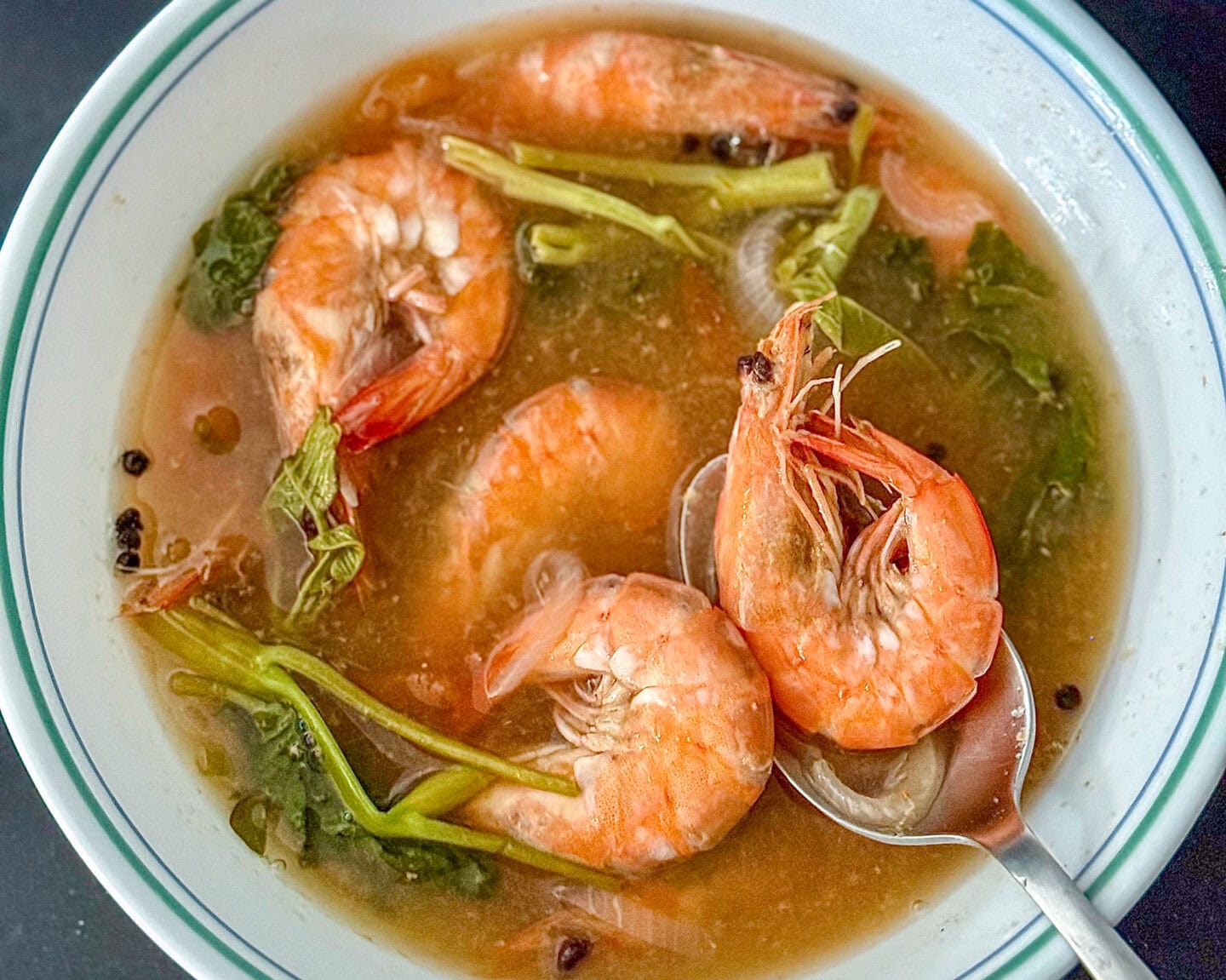
Authentic Sinigang na Hipon, a classic Filipino shrimp sour soup, with tamarind, vegetables, and aromatic spices. This easy 30-minute recipe features fresh shrimp, radish, okra, and kangkong in a tangy broth that pairs perfectly with steamed rice.
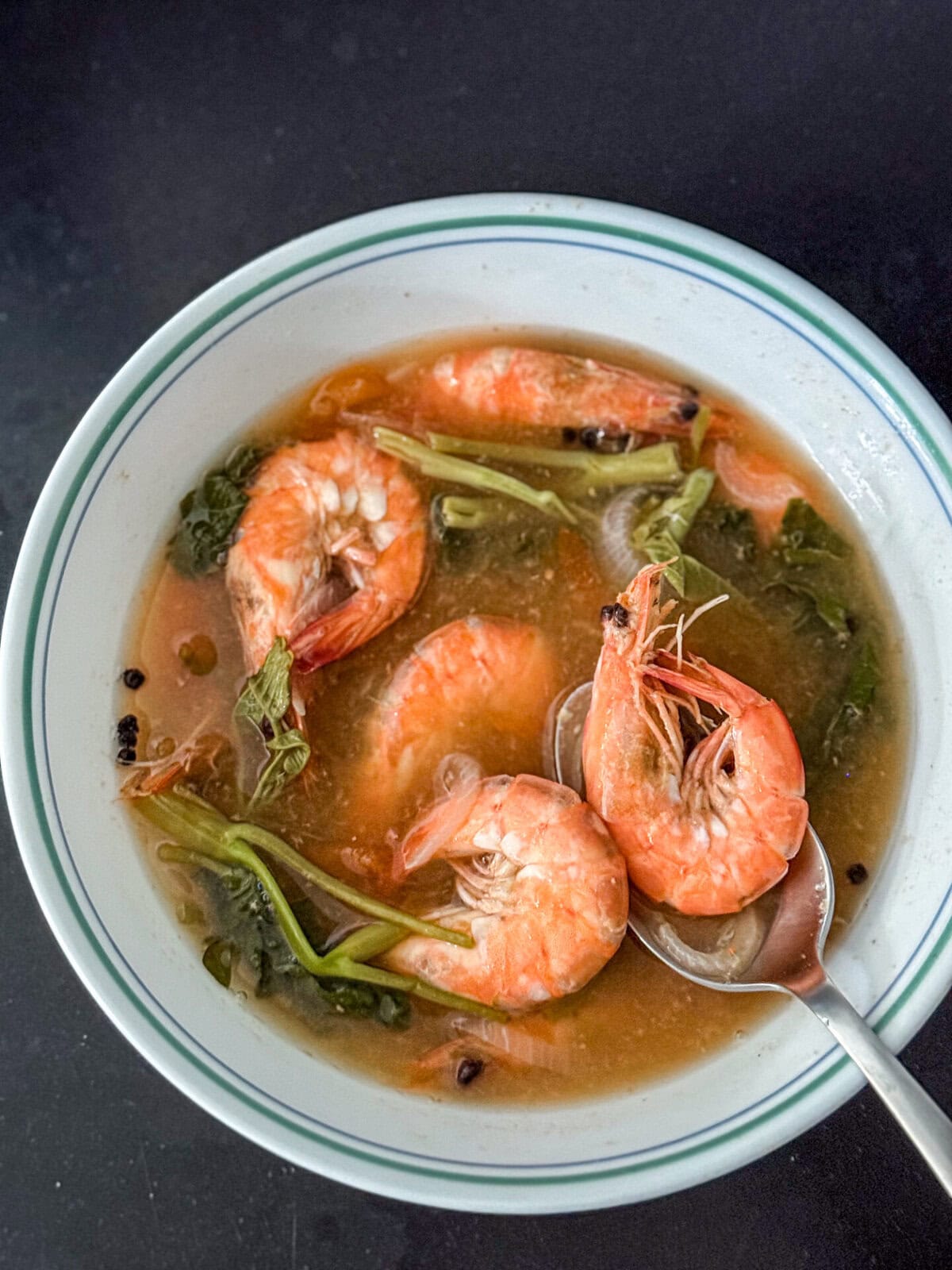
A classic Filipino soup made with shrimps, tomatoes, mild green chili peppers, radishes, and okra, characterized by its tangy-sour flavor usually from the tamarind fruit or local lemons.
Living in an island archipelago surrounded by water can have many advantages! For me, this is the top reason – fresh seafood!
So, whenever I went back to the Philippines for a holiday, I would ask my mom to cook Filipino dishes for me, all of which involved seafood, especially shrimp and prawns, my ultimate favorites.
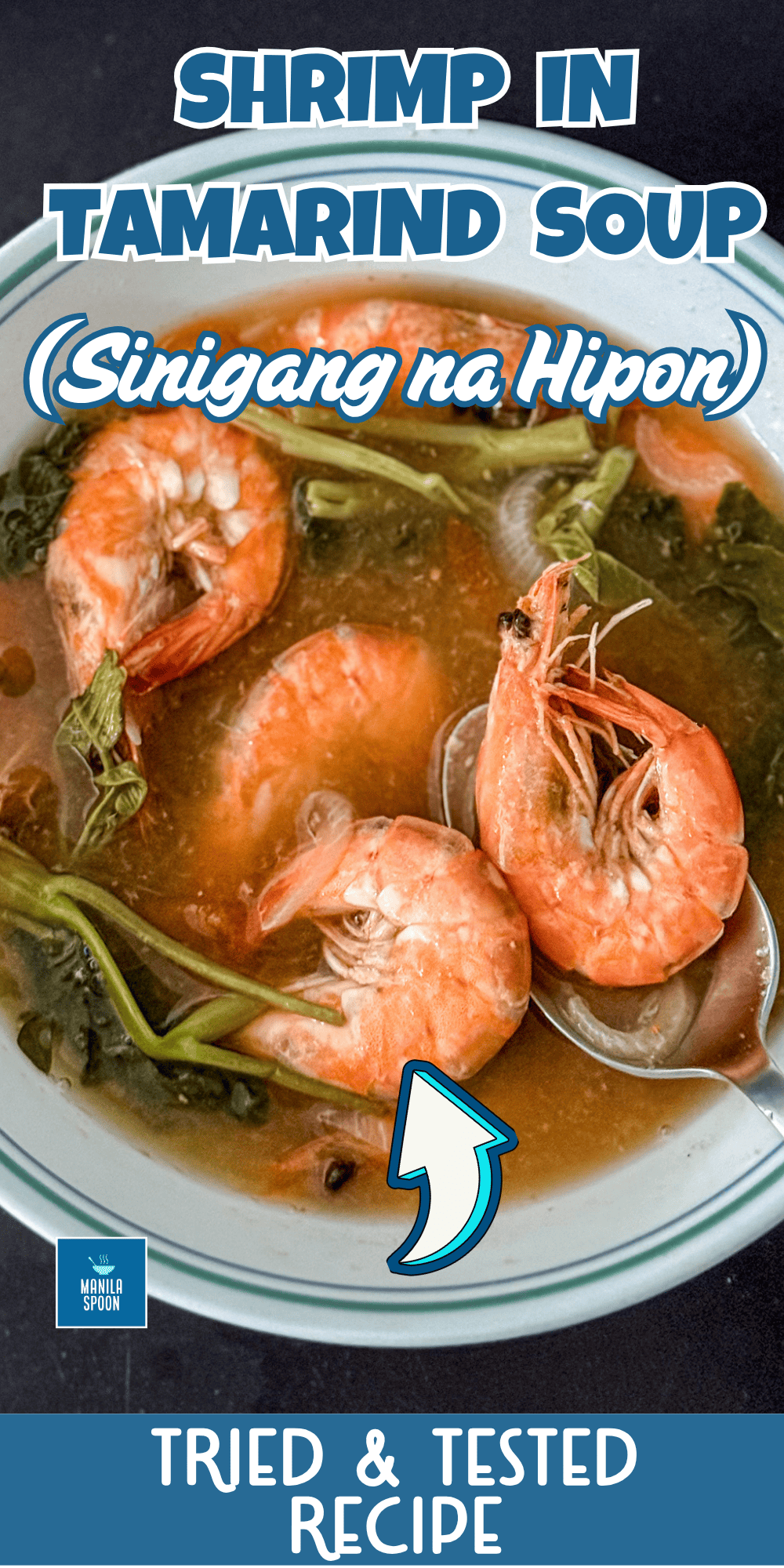
Sinigang na Hipon is a classic Filipino soup characterized by its tangy-sour flavor derived from tamarind fruit or fresh lemon juice.
The soup’s versatility allows for multiple protein substitutions, including pork, beef, chicken, or fish in place of shrimp.
Fresh tamarind juice can be replaced with powdered tamarind packets, tamarind concentrate, or fresh lemon juice without compromising the dish’s authentic sour profile. So, if you cannot find tamarind, do use fresh lemons (about 2-3 pieces depending on how tangy you want your soup).
The cooking method involves layering ingredients by cooking time, with vegetables added before shrimp to ensure proper texture, and leafy greens stirred in at the end using residual heat.
The Philippines’ island geography provides abundant access to fresh seafood, making shrimp-based dishes particularly popular in Filipino cuisine.
What Ingredients are needed for Sinigang na Hipon?
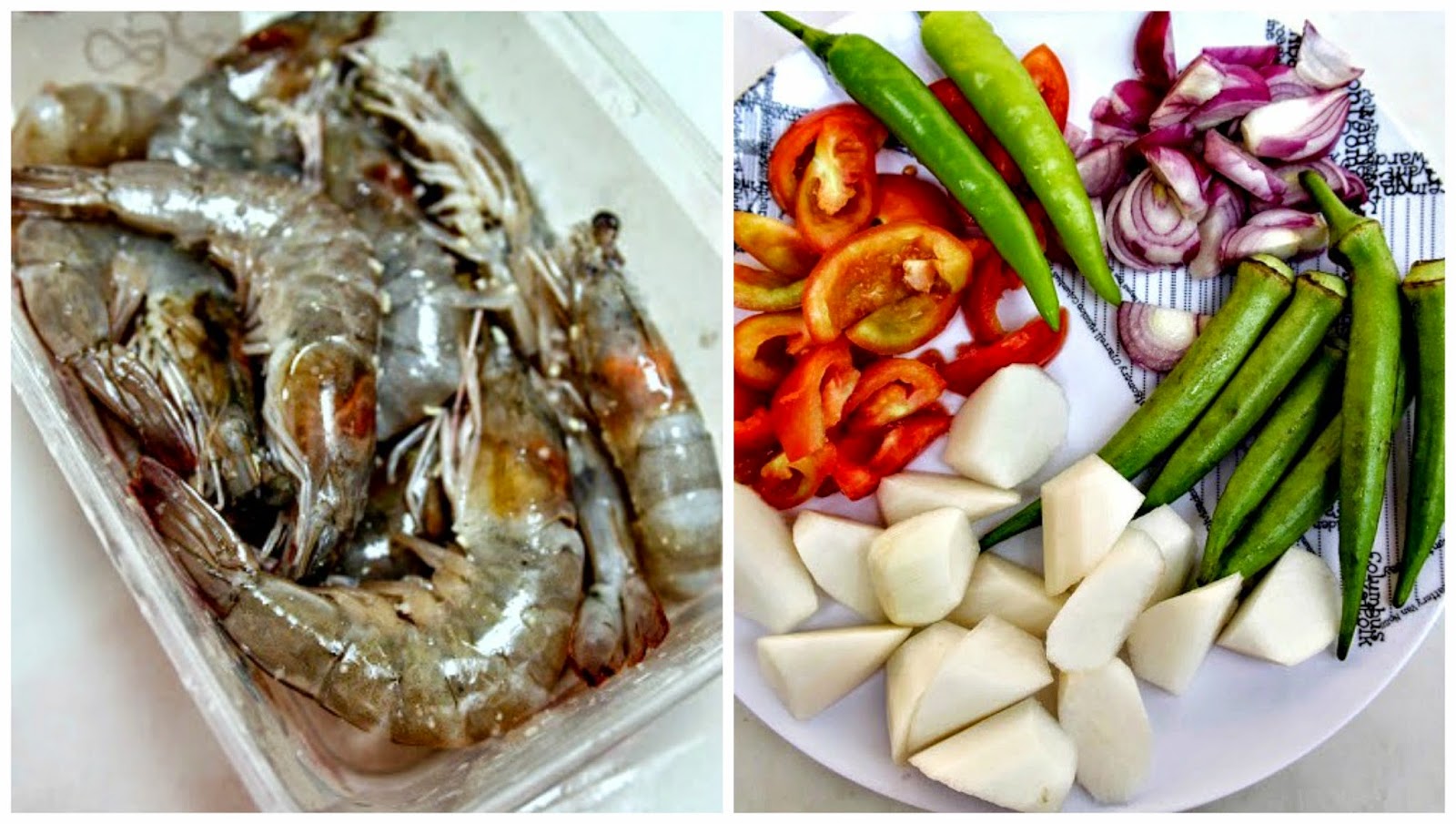
Kangkong: Also known as water spinach or river spinach, this leafy green vegetable is commonly used in Filipino soups and has a mild flavor and tender texture when cooked.
Tamarind: A tropical fruit pod with intensely sour pulp used as a souring agent in Southeast Asian cuisine, available fresh, as concentrate, or in powdered form.
Fish Sauce (Patis): A fermented condiment made from fish and salt that provides umami depth and saltiness to Filipino dishes, often used as a seasoning and table condiment.
- 6 cups Water
- 1 lb Shrimps (with skin and head), seasoned with a little salt
- 3 Plum Tomatoes, quartered
- 2 Onions, chopped
- 1 White Radish, sliced
- 2 mild Green Chile Peppers or Banana Peppers
- 6 Okra
- 1-1/2 cups freshly squeezed Tamarind juice or to taste*
- 2 Tablespoons Fish sauce or use Salt instead, to taste
- 1 (10 oz) pack fresh Spinach or 1-2 bunches of Kangkong
How to Make Filipino Shrimp in Sour Tamarind Soup?
- In a large pan, bring the water to a simmer (almost boiling). Add the tomatoes, onions, and sliced radishes and cook until the latter are tender-crisp (half-cooked).
- Add the green chili peppers, okra, and tamarind juice, then continue cooking for another 3 minutes.
- Add the shrimp and season with salt or fish sauce, to taste. Cook for another 4-5 minutes, or until the shrimp are cooked and the veggies are all tender. Check the seasoning at this point – add more souring agent, fish sauce or even water, if necessary – whatever your taste buds tell you!
- Turn off the heat. Stir in the Kangkong or spinach and then cover and let it wilt and cook for a couple of minutes. The steam from the hot soup should cook it quickly. Ladle into bowls and enjoy immediately!
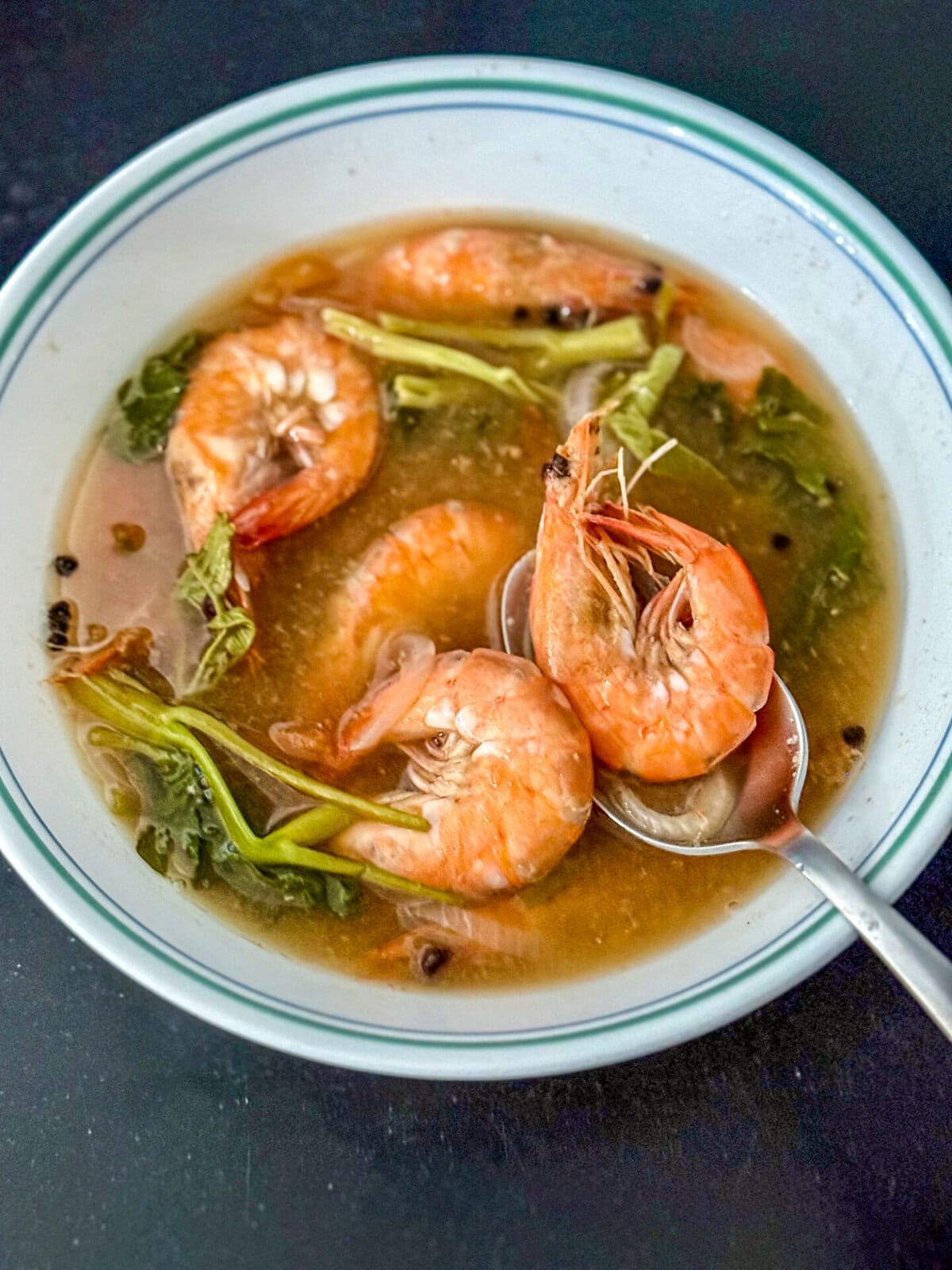
Pro Tip to Add more flavor to your Shrimp Sinigang!
Filipino cooks know that shrimp with heads create infinitely better sinigang, but the real secret is what you do with those heads during cooking.
The Flavor Extraction Method:
Step 1: Before adding whole shrimp, gently press each shrimp head with the back of a spoon against the side of the pot while it’s in the simmering broth
Step 2: The orange-yellow fat (tomalley) releases into the soup, creating a subtle sweetness and umami depth
Step 3: This released fat also creates natural emulsification, giving your broth body without cloudiness
You’ll see tiny orange droplets floating on the surface—this is liquid gold. These droplets contain concentrated shrimp essence that amplifies seafood flavor by 300%.
Alternative for Headless Shrimp:
Save shrimp shells in your freezer. When you accumulate 2 cups worth, simmer them in 4 cups water for 20 minutes, strain, and use this as your soup base instead of plain water.
Frequently Asked Questions (FAQs)
Can I make sinigang ahead of time and reheat it?
Yes, sinigang actually develops deeper flavor when made ahead, but cook it only 80% of the way and don’t add the leafy greens until reheating. When ready to serve, bring the soup back to a simmer, add fresh kangkong or spinach, and adjust the sourness, as the tamarind flavor mellows over time. This prevents overcooked shrimp and mushy vegetables.
Why does my sinigang taste flat even though I used enough tamarind?
Flat-tasting sinigang usually lacks the savory counterbalance to the sourness. The solution is adding fish sauce or salt gradually while tasting—the sodium enhances the sour notes and brings out the natural sweetness of the shrimp and vegetables. Some cooks also add a pinch of sugar to create more flavor complexity.
What’s the best way to extract tamarind juice from fresh tamarind pods?
Remove the shells and fibers from the tamarind pods, then soak the pulp in 2 cups of hot water for 15 minutes. Mash the softened pulp with your hands or a fork, then strain through a fine-mesh sieve, pressing to extract all the liquid. This yields concentrated tamarind juice that you can adjust to taste.
Can I use frozen shrimp instead of fresh, and will it affect the flavor?
Frozen shrimp works well for sinigang, but thaw them in the refrigerator overnight rather than using hot water, which washes away flavor. If buying frozen, choose shell-on, head-on varieties when possible since the shells contribute significant flavor to the broth. Add frozen shrimp directly to the simmering soup without thawing if you’re short on time; just cook 2 minutes longer.
What other vegetables can I add or substitute in sinigang?
Traditional additions include taro root (gabi), string beans, eggplant, and bok choy. Water spinach can replace regular spinach, and daikon radish can substitute white radish. Add starchy vegetables like taro at the beginning with the radish, and treat leafy vegetables like bok choy the same as spinach—stirring in at the end with residual heat.
Shrimp in Sour Soup
Ingredients
- 6 cups Water
- 1 lb Shrimps, with skin and head, seasoned with a little salt
- 3 Plum Tomatoes, quartered
- 2 Onions, chopped
- 1 White Radish, sliced
- 2 mild Green Chile Peppers or Banana Peppers
- 6 Okra, sliced
- 1-1/2 cups freshly squeezed Tamarind juice, or to taste
- 2 Tablespoons Fish sauce, to taste
- 1 10 oz pack fresh Spinach or 1-2 bunches of Kangkong
Instructions
- In a large pan, bring the water to a simmer (almost boiling). Add the tomatoes, onions and sliced radishes and cook until the latter are tender-crisp (half-cooked).
- Add the green chili peppers, okra and tamarind juice and continue to cook for another 3 minutes.
- Add the shrimp and season with salt or fish sauce, to taste. Cook for another 4-5 minutes or until shrimps are cooked and veggies are all tender. Check the seasoning at this point – add more souring agent, fish sauce or even water, if necessary – whatever your taste buds tell you!
- Turn off the heat. Stir in the Kangkong or spinach and then cover and let it wilt and cook for a couple of minutes. The steam from the hot soup should cook it quick. Ladle into bowls and enjoy immediately!





I don't know much about the Philipines but I've tried Filipino food and love it. This soup looks easy and seems like it is packed with flavor – a real winner.
This sounds so good! I love the addition of okra and radishes! Love going home to have my mom make her specialties!
Our family loves Asian soups and this one looks like a winner. Can't wait to try it.
Thank you for sharing this! I am part Filipino however, I don't have much experience with authentic Filipino food. I make lumpia, adobo and sometimes pancit but that's the extent of it. I must try this!
hehehehhe sarap naman nito.
Thanks, Tanya! I need to make this again as I surely miss it.