
Pancit / Pansit (Authentic Philippine Noodle Dish Recipe)
Make this easy, tried-and-tested Filipino pancit recipe with chicken, tender-crisp vegetables, and savory noodles. This crowd-pleasing stir-fry is perfect for family dinners, parties, and fun gatherings. This authentic recipe always gets great feedback!
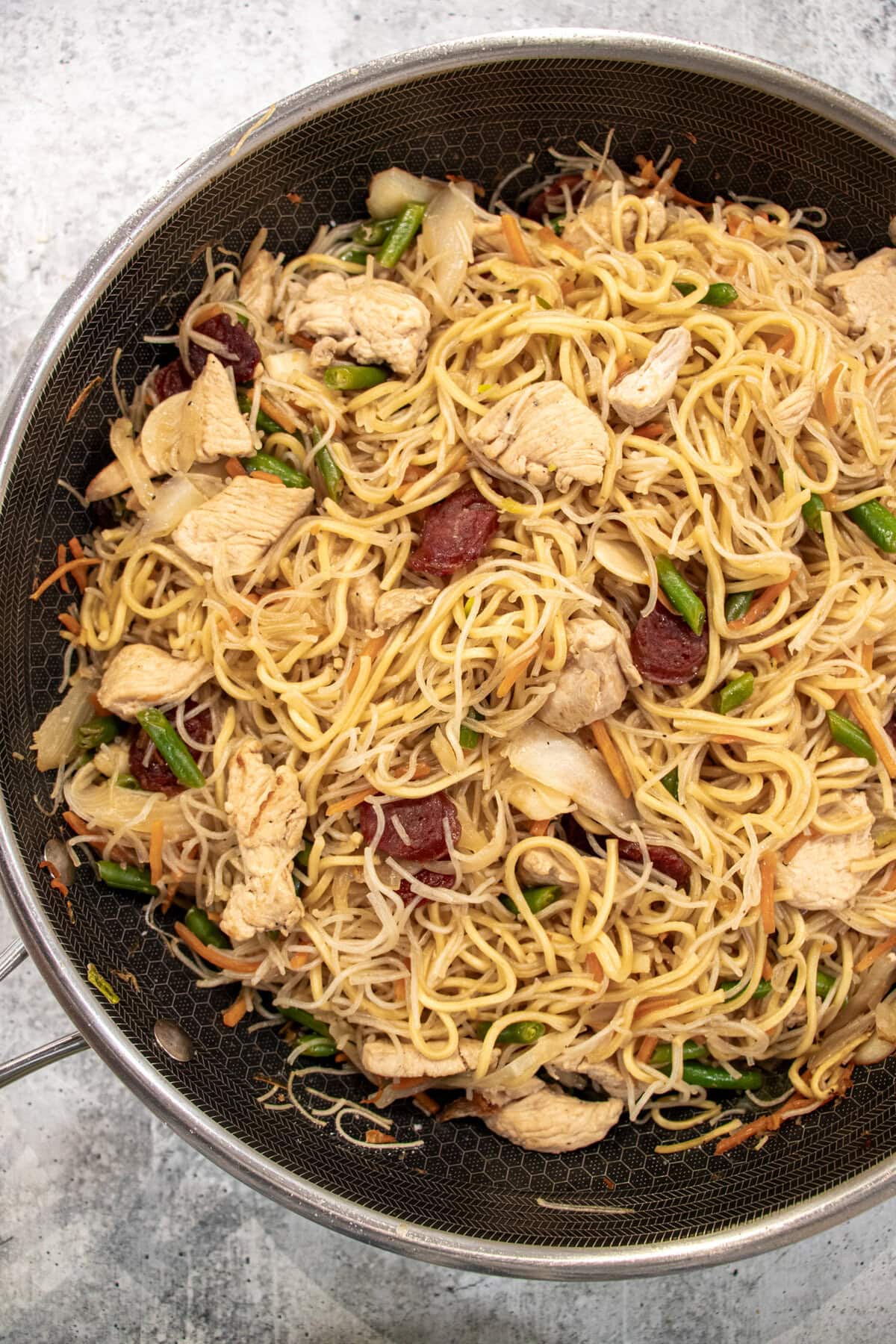
If I am ever asked what Filipino comfort food is, I have only one answer: Pancit! Traditionally made with rice flour, it comes in different varieties and sizes. The most popular version is Pancit Bihon (rice stick or vermicelli), though Pancit Canton (using egg and wheat noodles) is just as common. I love combining both when I make my pancit because I love the different textures of the noodles, and it looks more appetizing and tastes better, too! I learned all this from my mom, who, I believe, makes the best-tasting pancit!
If you love noodle stir-fries like pancit, then you need to check out our other delicious noodle offerings, like this recipe on How to Make Pad Thai, Malaysian specialty Hokkien Mee, a flavorful Singaporean Yellow Noodles in Sweet and Spicy Sauce (Mee Goreng Mamak), a Filipino favorite, Easy Pancit Canton, and its Instant Pot version (yes, you can easily make pancit in the pressure cooker!).
Table of contents

What Is Pancit?
Pancit, also spelled pansit, is a general term for noodles in the Philippines. The dish is naturally gluten-free when made with rice noodles. In this recipe, pancit bihon refers to thin rice stick noodles (vermicelli), while pancit canton refers to egg-and-wheat noodles. You can make the dish with bihon alone or combine the two for contrasting textures. Pancit is a beloved comfort food served at birthdays, anniversaries, and other celebrations, but it’s also a welcome everyday meal or satisfying snack.
Why You Would Love This Recipe for Pancit
This Filipino noodle stir-fry appeals because of its balance. Chicken makes it hearty, vegetables add color and texture, and the noodles soak up the seasoned cooking liquid. Soy sauce supplies savory depth, oyster sauce adds richness, and a little sugar rounds out the flavors. Calamansi, lemon, or lime provides the finishing tang. Everything comes together in a large wok or skillet, making this a practical recipe when you want a generous dish to share.
The “Liquid Gold” Technique: Why Your Chicken Broth Makes or Breaks Pancit
Most pancit recipes tell you to boil chicken, but they don’t explain why the broth you create is actually the secret weapon that separates mediocre pancit from restaurant-quality versions.
The Science Behind the Broth:
• Collagen extraction: Boiling chicken with bones releases collagen that creates a silky coating on each noodle strand
• Flavor concentration: The broth carries dissolved proteins and aromatics that penetrate the rice noodles more effectively than plain water
• Texture control: The natural gelatin in chicken broth prevents noodles from becoming gummy or sticky
Pro Move: Add a small piece of ginger and a bay leaf to your chicken while boiling. The subtle background notes elevate the entire dish without announcing themselves, creating that “I can’t figure out what makes this so good” factor.
In a pinch, you can also use store-bought chicken broth, but in my experience, this adds more flavor.
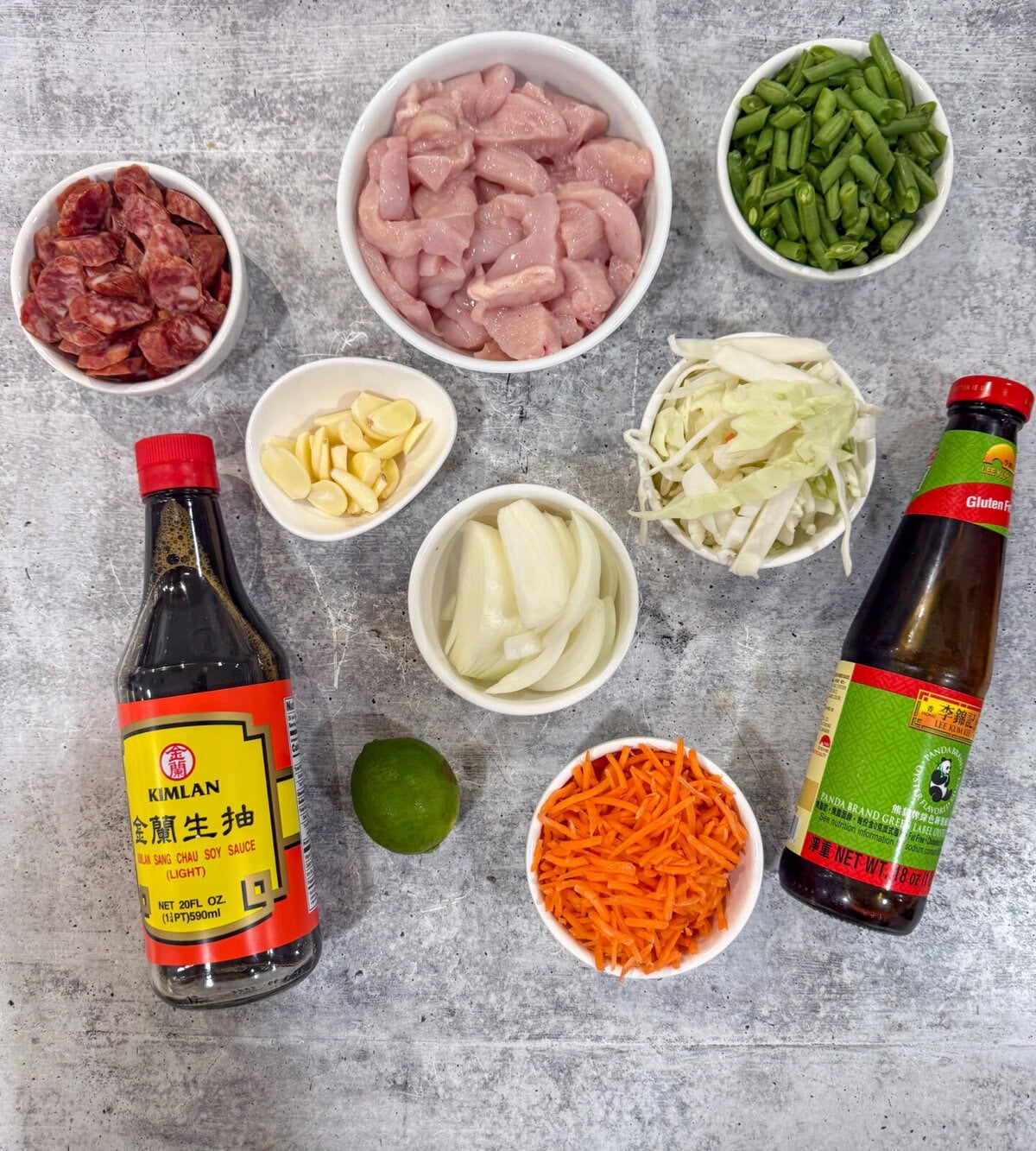
Ingredients for Chicken Pancit
For the noodles, chicken, and vegetables, gather:
- 2 tablespoons olive oil
- 4 garlic cloves, chopped
- 1 medium onion, chopped
- 3 pieces Chinese Sausage, sliced (optional)
- 2 cups cooked chicken, shredded
- 1-1 1/2 cups each of any 2-3 of these vegetables: carrots, green beans, snow peas, or cabbage
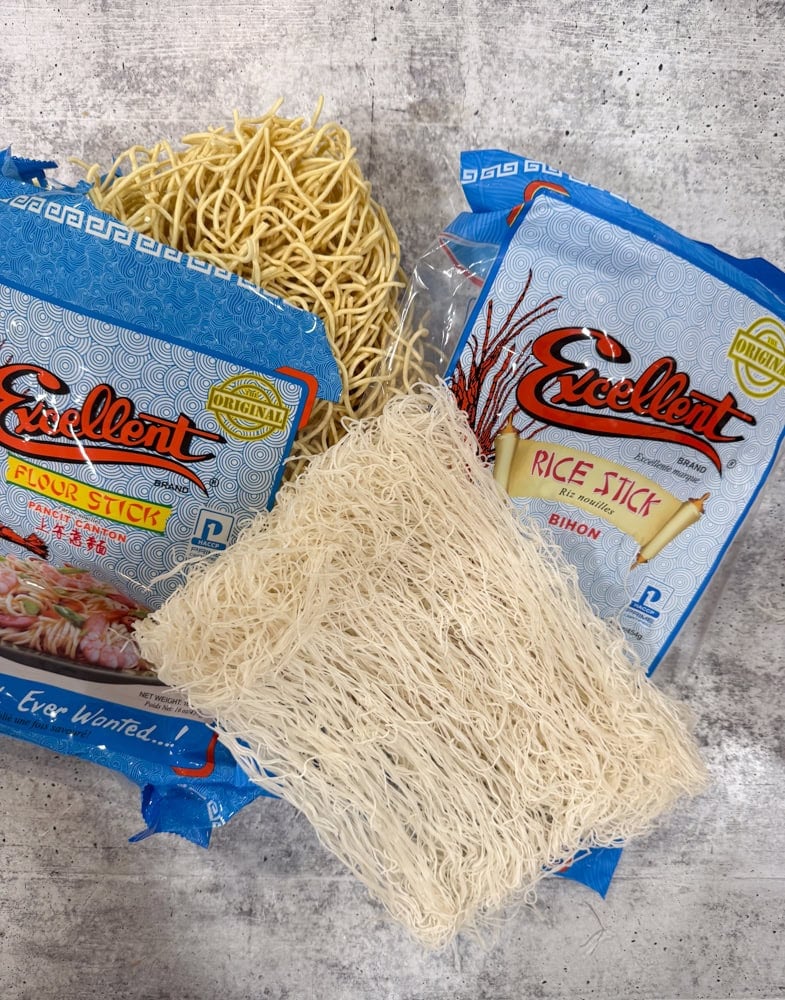
- 16 oz package pancit bihon, or one 8 oz package each of bihon and canton (to equal 16 oz)
- About 3 cups reserved chicken cooking liquid (broth reserved from cooking the chicken), using 2½ cups initially.
For the pancit seasoning sauce or broth, you will need:
- 5 tablespoons soy sauce
- 1½ tablespoons oyster sauce
- 2 teaspoons sugar, or to taste
- Salt and pepper, to taste
- Calamansi, lemon, or lime, for serving
Step-by-step Instructions on How to Make Pancit
Prepare the chicken and broth. Boil one large chicken breast or two to three bone-in thighs (depending on size) in enough water to cover, starting with more than three cups. Once tender, remove the chicken and reserve about three cups of cooking liquid. Allow the meat to cool enough to handle, then shred or cut it into small pieces. Measure out two cups for the stir-fry.
Note: In a pinch, you can use store-bought chicken broth and just cook the chicken from raw with the aromatics. Cooking the chicken ahead and using its own broth adds a richer flavor in my opinion.
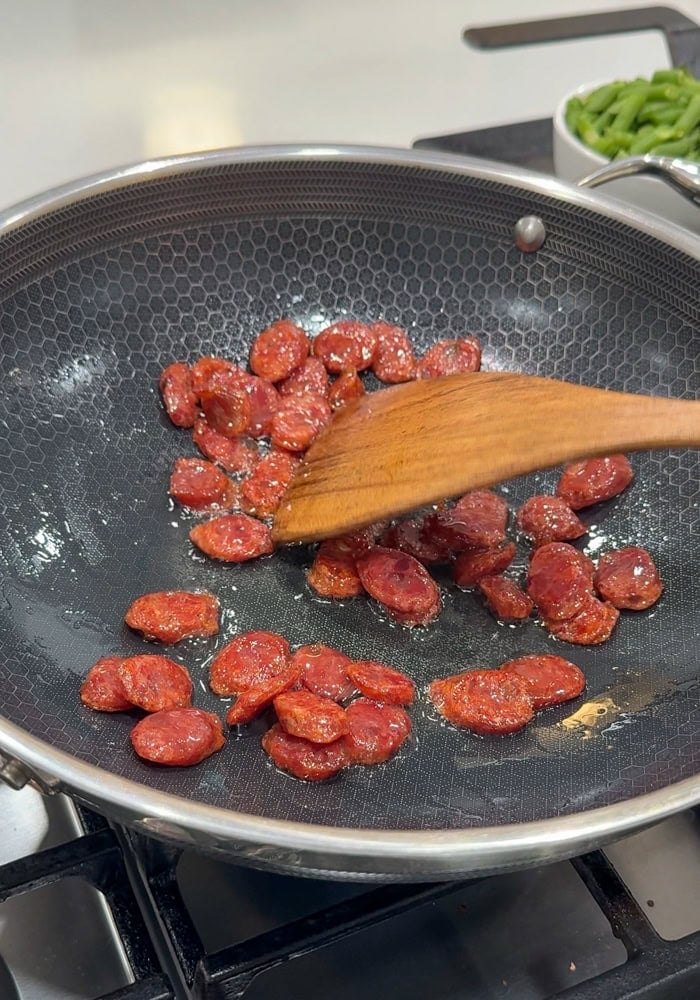
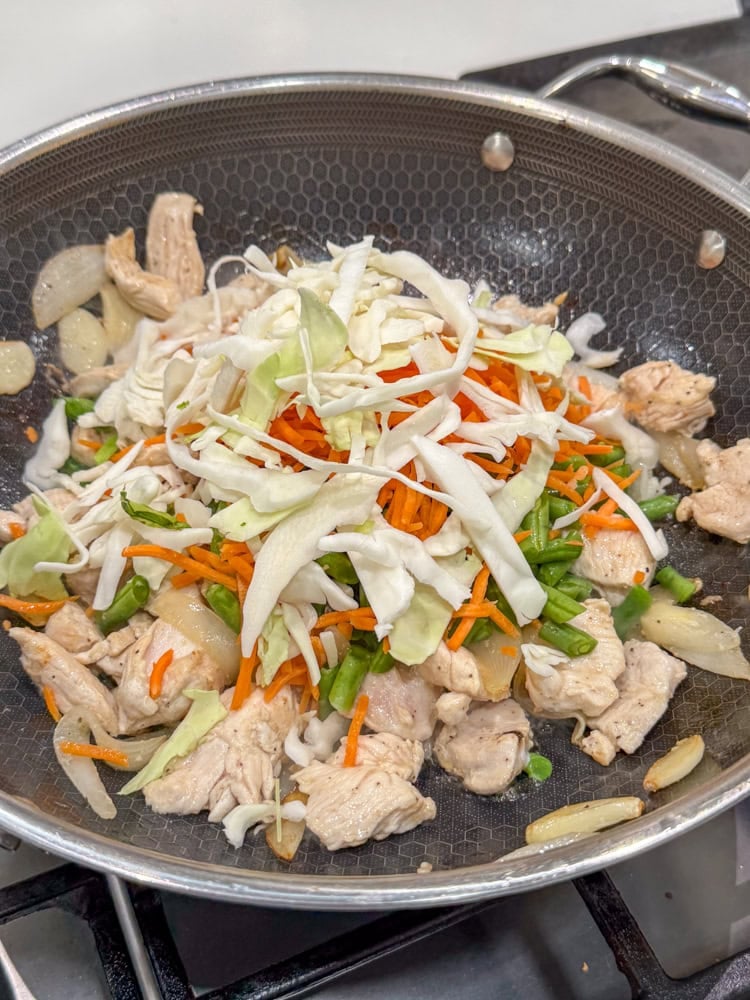
Sauté the aromatics and vegetables. Heat the olive oil in a large wok or skillet. If using the Chinese sausages, stir-fry for 2 to 3 minutes in a large pan or wok until the edges turn slightly golden and crisp. Remove and set aside. Sauté the garlic and onion for about one minute, then add the cooked chicken. Season lightly with salt and pepper.
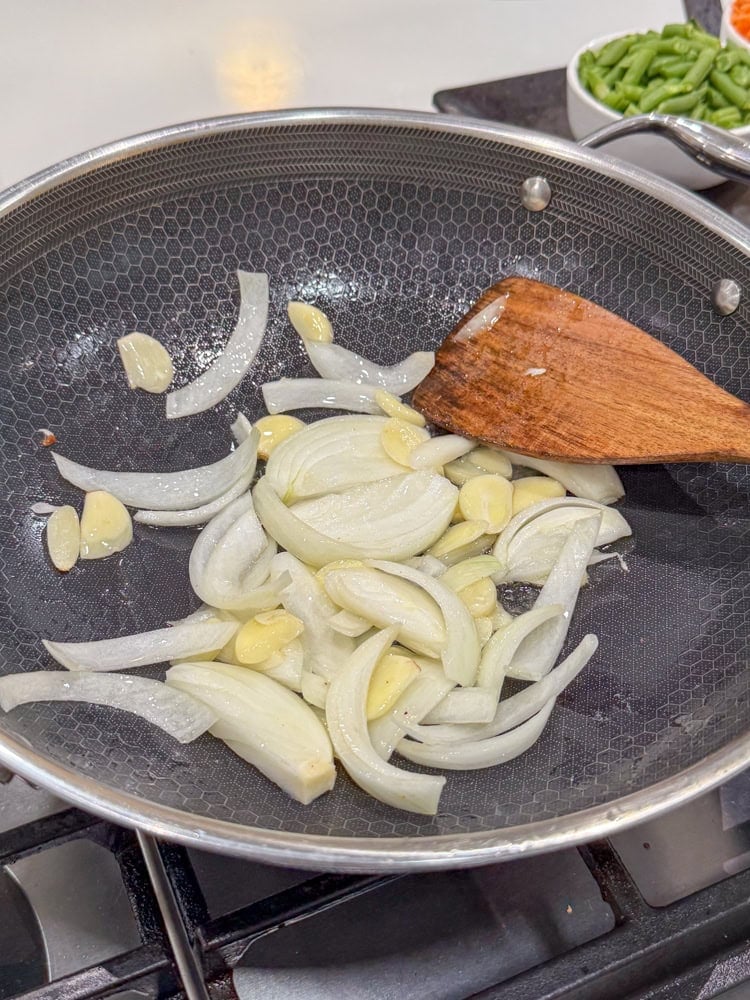
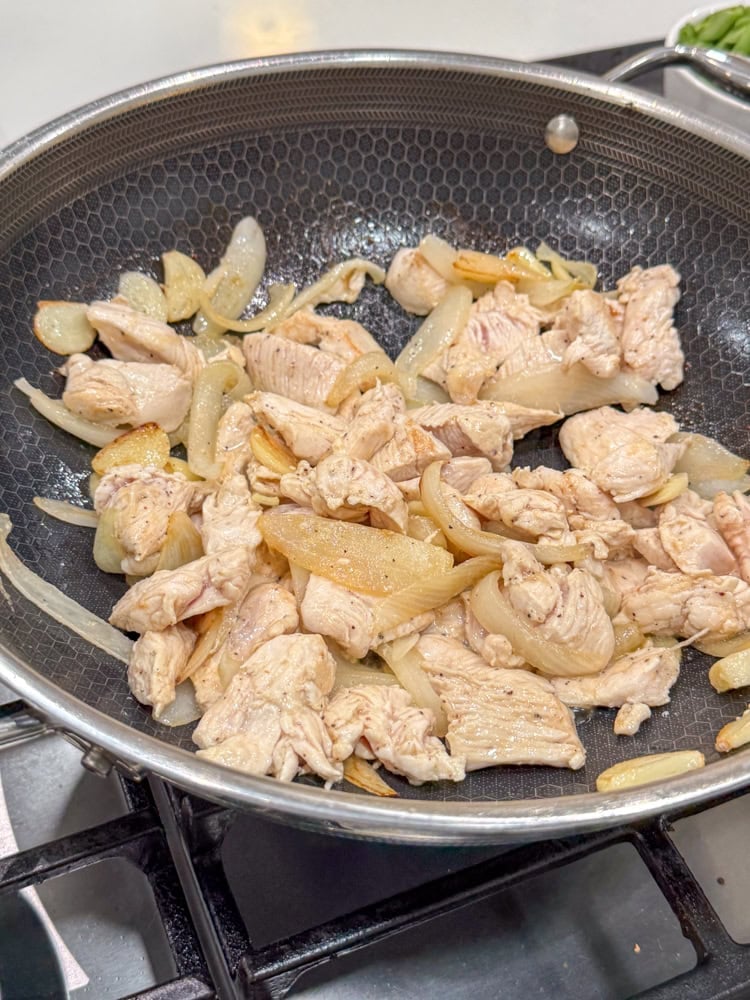
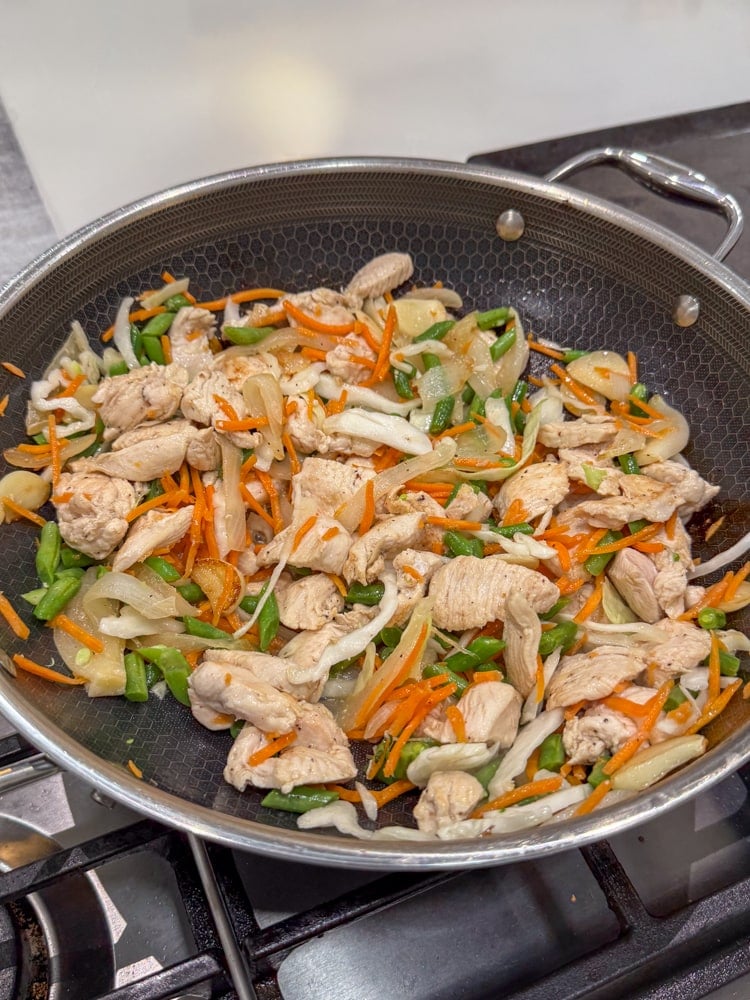
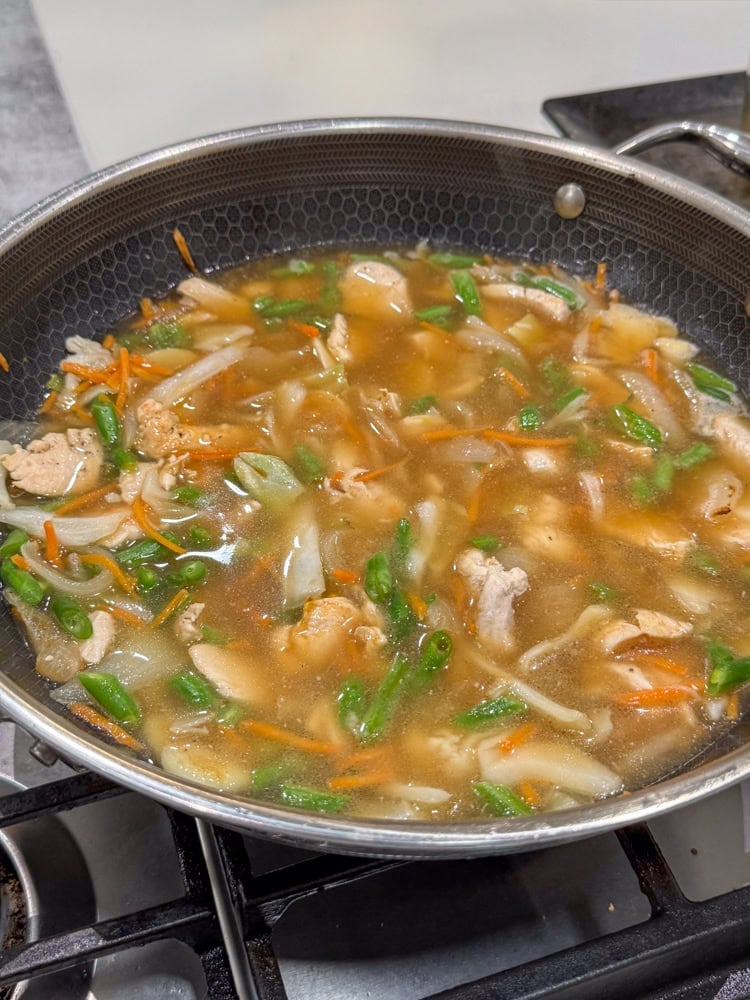
Build the savory sauce. Stir in your chosen vegetables and cook for another three to four minutes, until they begin to soften. Pour in 2½ cups of reserved chicken cooking liquid or chicken broth. Add the soy sauce, oyster sauce, and sugar, then bring everything to a boil. This seasoned liquid does more than coat the ingredients: it also softens and flavors the noodles as they cook.
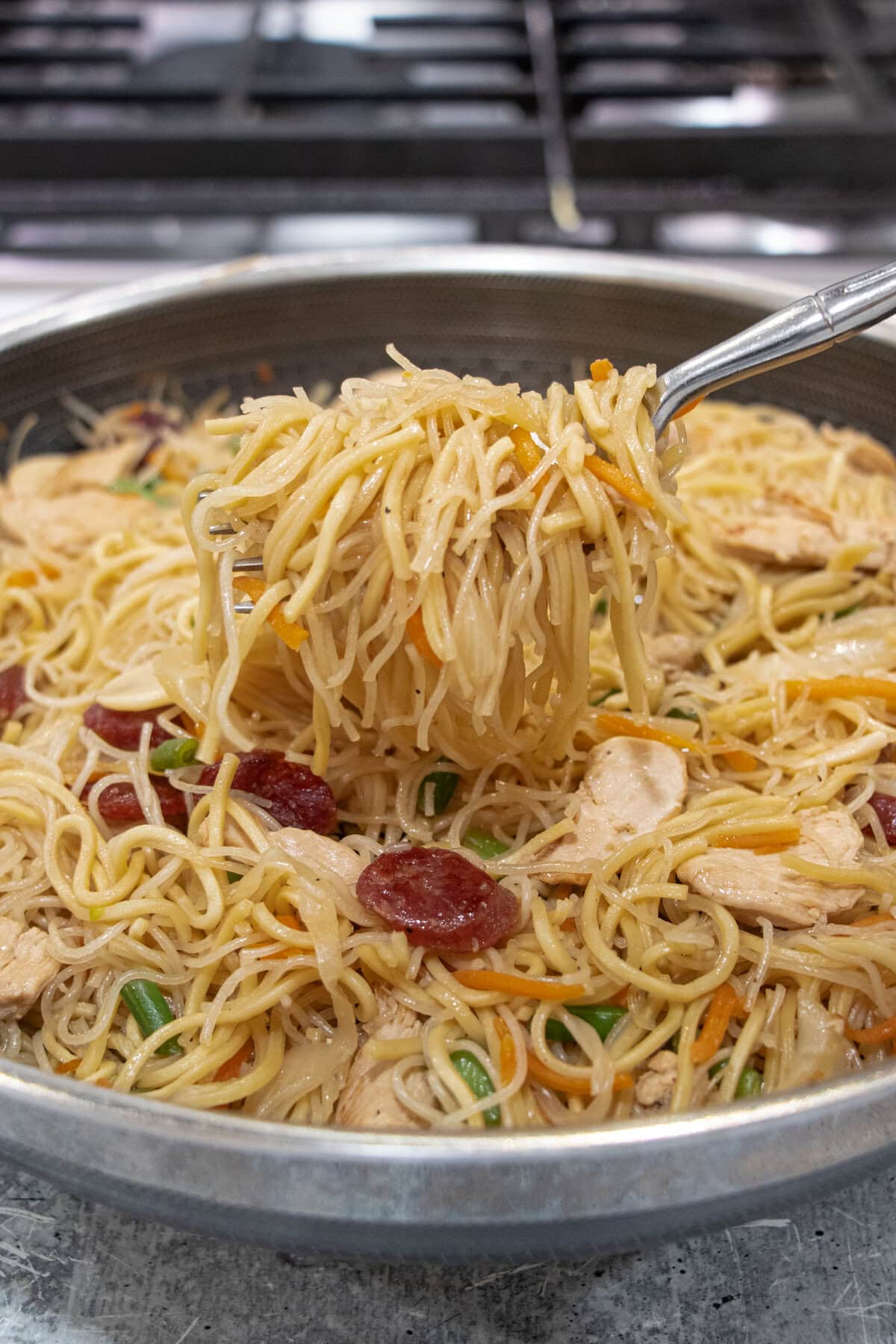
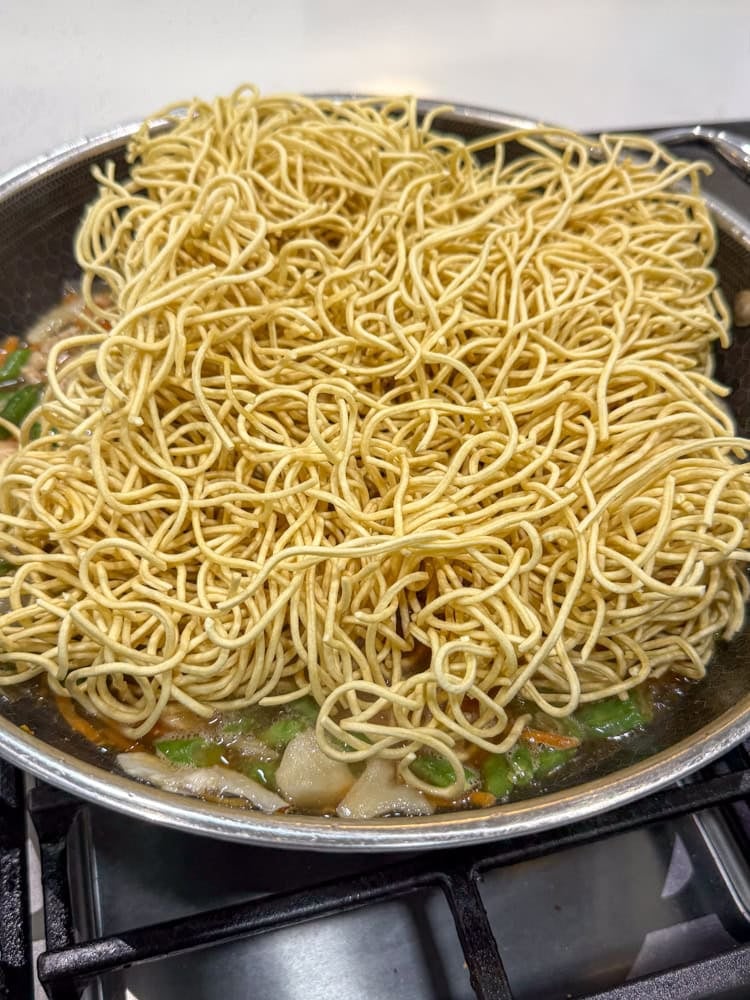
Add and gently fold the noodles. If combining noodle varieties, add the pancit canton first. Press and fold it into the liquid until it starts softening, then add the bihon. For an all-bihon version, add the rice noodles directly to the boiling mixture. Continue gently folding so the noodles absorb the sauce. Add extra reserved liquid if necessary, cooking until tender and the liquid has been absorbed. Add in the Chinese sausages and mix it with the rest of the ingredients.
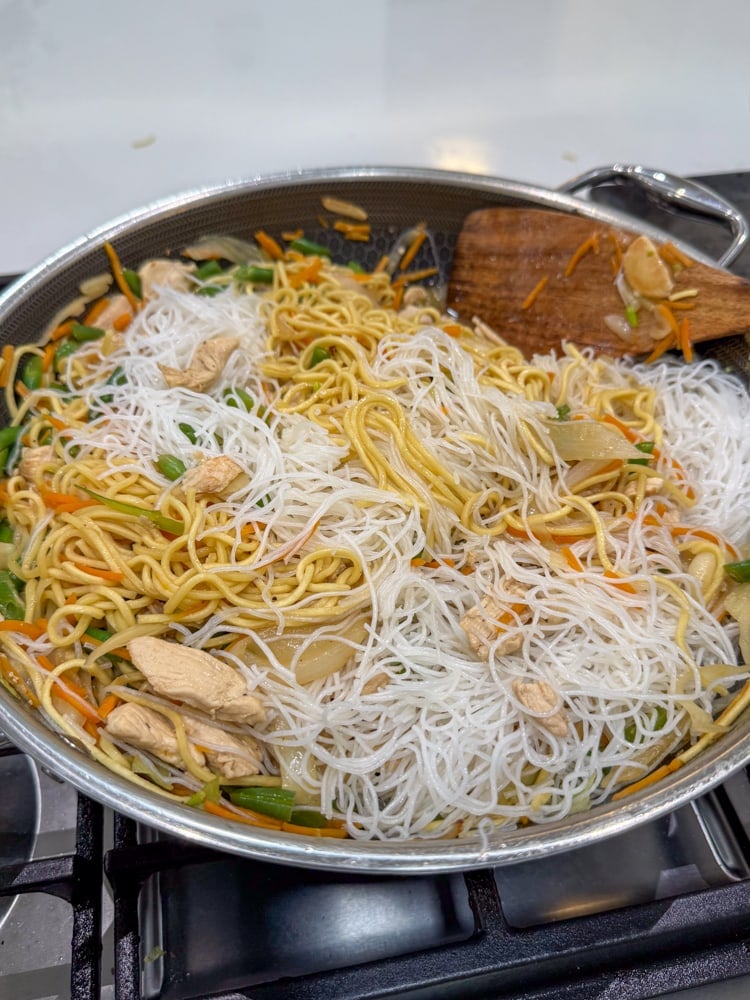
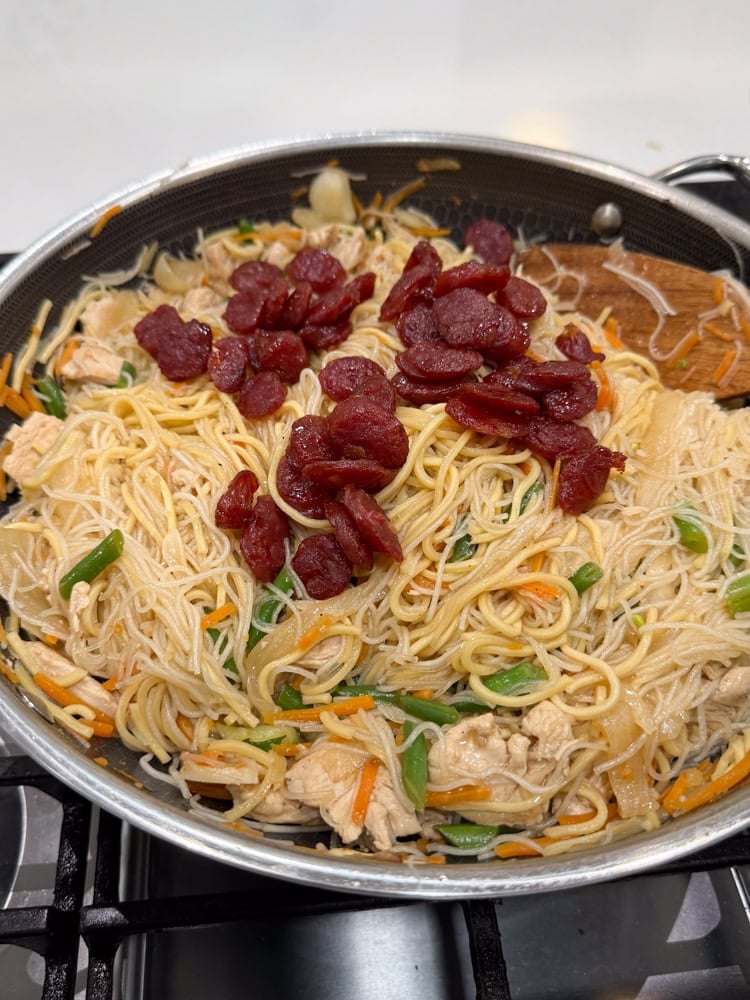
Finish with citrus. Taste the pancit and adjust the salt and pepper as needed. Serve with calamansi, lemon, or lime so everyone can squeeze a little juice over their portion. That final touch brings brightness to the savory chicken and noodles.
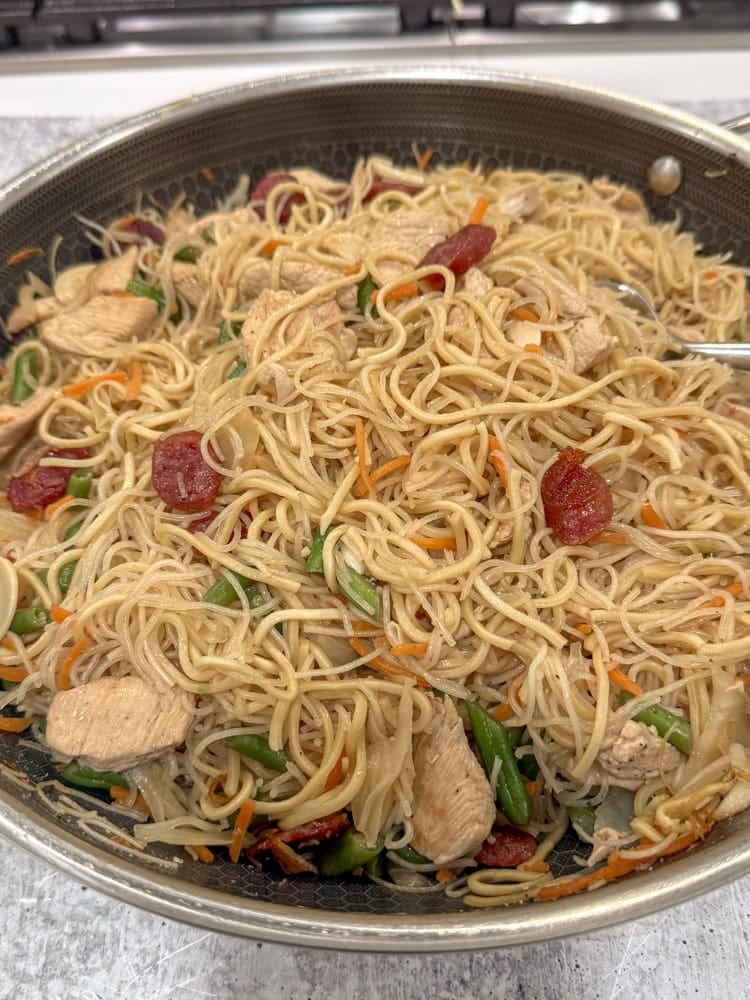
Tips for Tender, Flavorful Pancit
Watch the liquid rather than relying on a rigid cooking time. If the pan dries out before the noodles soften, add more stock or water. I recommend using Philippine noodle brands for this recipe as other brands may need longer cooking or require presoaking. For gluten-free pancit, choose rice noodles rather than canton and use gluten-free soy sauce and oyster sauce; rice noodles alone do not make every ingredient gluten-free.
Frequently Asked Questions (FAQs)
Can I make pancit ahead of time for a party?
Yes, but with a strategic approach. Cook the pancit until it’s about 90% done (slightly firmer than you’d normally serve), then spread it on a baking sheet to cool completely. Store refrigerated for up to 24 hours. When ready to serve, reheat in a wok or large skillet with 2-3 tablespoons of chicken broth or water to rehydrate the noodles and restore their texture.
Why do my noodles clump together and stick to the bottom of the pan?
This happens when the noodles aren’t continuously moved during the absorption phase or when there’s insufficient liquid. The key is to use tongs or chopsticks to gently lift and separate the noodles every 30 seconds once they hit the pan. Also, make sure your liquid-to-noodle ratio is correct and that the noodles are evenly distributed in the liquid.
What’s the difference between using all Pancit Bihon versus mixing it with Pancit Canton?
Pancit Bihon alone creates a lighter, more delicate texture that’s completely gluten-free since it’s made from rice flour. Pancit Canton (egg noodles) adds a chewier texture and slightly richer flavor but contains gluten. The 50/50 mix (called Pancit Bam-i in some regions) gives you the best of both worlds—the lightness of rice noodles with the satisfying chew of wheat noodles.
How do I prevent my vegetables from getting mushy in pancit?
Cut your vegetables into uniform sizes and add them to the wok based on their cooking times—carrots and green beans first (they take longer), then cabbage and snow peas last (they cook quickly). Each vegetable should only spend 2-3 minutes in active cooking before you add the noodles. The residual heat during the noodle-cooking phase will finish softening them without turning them to mush.
Can I use store-bought rotisserie chicken instead of boiling my own?
Absolutely, and it’s a great time-saver. However, you’ll need to create the liquid component separately by simmering 3 cups of chicken stock or broth with a few smashed garlic cloves, a slice of onion, and a pinch of salt for 10 minutes. This replaces the chicken-boiling liquid that provides essential flavor and the right texture for the noodles to absorb properly. But in a pinch, you can also use storebought chicken stock or broth.
Love more noodle recipes like this? Check out our cookbook with 75 delicious, authentic RICE & NOODLE dishes from Southeast Asia, including many from the Philippines. All recipes in full color – order from Amazon here. Or, simply click the photo.

Check out the cookbook content below. Available on Amazon, Barnes & Noble and anywhere books are sold. You can order a copy HERE.
Whether you choose delicate bihon or a bihon-and-canton combination, this homemade pancit recipe offers plenty of savory flavor in a shareable dish. Serve it freshly cooked, keep citrus wedges nearby, and let the chicken, vegetables, and sauce-soaked noodles take center stage. It is an inviting way to bring Filipino comfort food to your table.
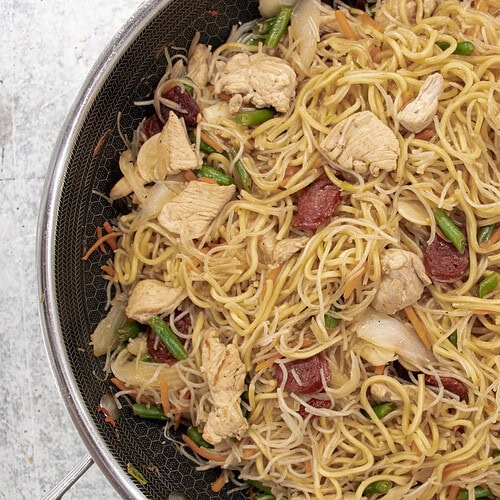
Pansit/Pancit Philippine Noodle Stir-fry
Equipment
- Wok or large Skillet
Ingredients
For the Noodles
- 2 tbps olive oil
- 3 pieces Chinese sausage, sliced thinly (optional)
- 4 cloves garlic, chopped
- 1 medium onion, chopped
- 2 cups cooked or boiled chicken (reserve liquid used for boiling chicken), shredded
- 1½ cups each carrots, green beans, snow peas or cabbage, choose any 2-3 of the veggies (carrots – julienned, cabbage – thinly chopped, green beans – thinly sliced diagonally, snow peas – as is)
- 1 (16 oz) pack of Pansit Bihon (rice noodle stick) or a combo of pancit canton (yellow egg-wheat noodles) and pancit bihon (8 oz each pack, if doing the combo), use Philippine brand if possible
For the Pancit Seasoning Sauce
- 5 tbsp soy sauce, regular or gluten-free
- 1½ tbsp oyster sauce, regular or gluten-free
- 2 tsp sugar, or to taste
- salt, to taste
- pepper, to taste
- 1 calamansi, lemon or lime, halved or quartered to be served with the pancit
Instructions
- Prepare the chicken and broth. Boil one large chicken breast or two to three bone-in thighs (depending on size) in enough water to cover, starting with more than three cups. Once tender, remove the chicken and reserve about three cups of cooking liquid. Allow the meat to cool enough to handle, then shred or cut it into small pieces. Measure out two cups for the stir-fry.Note: In a pinch, you can use store-bought chicken broth and just cook the chicken from raw with the aromatics. Cooking the chicken ahead and using its own broth adds a richer flavor in my opinion.
- Sauté the aromatics and vegetables. Heat the olive oil in a large wok or skillet. If using the Chinese sausages, stir-fry for 2 to 3 minutes in a large pan or wok until the edges turn slightly golden and crisp. Remove and set aside. Sauté the garlic and onion for about one minute, then add the cooked chicken. Season lightly with salt and pepper.
- Build the savory sauce. Stir in your chosen vegetables and cook for another three to four minutes, until they begin to soften. Pour in 2½ cups of reserved chicken cooking liquid. Add the soy sauce, oyster sauce, and sugar, then bring everything to a boil. This seasoned liquid does more than coat the ingredients: it also softens and flavors the noodles as they cook.
- Add and gently fold the noodles. If combining noodle varieties, add the pancit canton first. Press and fold it into the liquid until it starts softening, then add the bihon. For an all-bihon version, add the rice noodles directly to the boiling mixture. Continue gently folding so the noodles absorb the sauce. Add extra reserved liquid if necessary, cooking until tender and the liquid has been absorbed. Add in the Chinese sausages and mix it with the rest of the ingredients.
- Finish with citrus. Taste the pancit and adjust the salt and pepper as needed. Serve with calamansi, lemon, or lime so everyone can squeeze a little juice over their portion. That final touch brings brightness to the savory chicken and noodles.




I have added this to my menu for this weekend. We have a few family members coming over and this looks simple enough to make for a crowd of hungry guests. I love Pancit, so I can’t wait to give this recipe a try.
My noodle loving family really enjoyed this pancit! Such a flavourful dish.
I made this noodle stir-fry alternating with already known in our family rice stir-fry. Well, it is pure deliciousness!! And I highly recommend making it!
Served this pancit for dinner last night and it didn’t disappoint! So easy and quick; perfect for busy weeknights!
I love the noodles used and the flavorful sauce. Definitely, this pancit is must-make noodle stir fry meal.
This was a light and tasty dish. I will make it again but will double the vegetables in it. I used cabbage, carrots and green beans.
This recipe hits all the right spots! I use cabbage and carrots because that’s what I remember growing up. I also sometimes add some pork and shrimp to the chicken.
I love the addition of pork and shrimp – makes it a more filling dish. So glad you enjoyed this and thank you for letting us know.
What else can I use besides oyster sauce my husband is allergic to all shell fish
There’s a vegan version of oyster called “mushroom oyster sauce” that you can use. There’s no seafood in it ’cause the umami flavors come from the mushrooms so that should be good. Hope this helps.
I’m coming in late on reviewing this, but I made it and really enjoyed it! I used 2 times the amount of vegetables (cabbage and carrots, plus a bit of red and green peppers), and half the rice noodles and sauce. When it was finished, I wished I hadn’t halved the sauce! So I quickly threw in some more soy sauce, some fish sauce, some MSG, and a touch of chili oil. Turned out great. My 2 companions went back for seconds!
Glad you enjoyed this! Yay!